
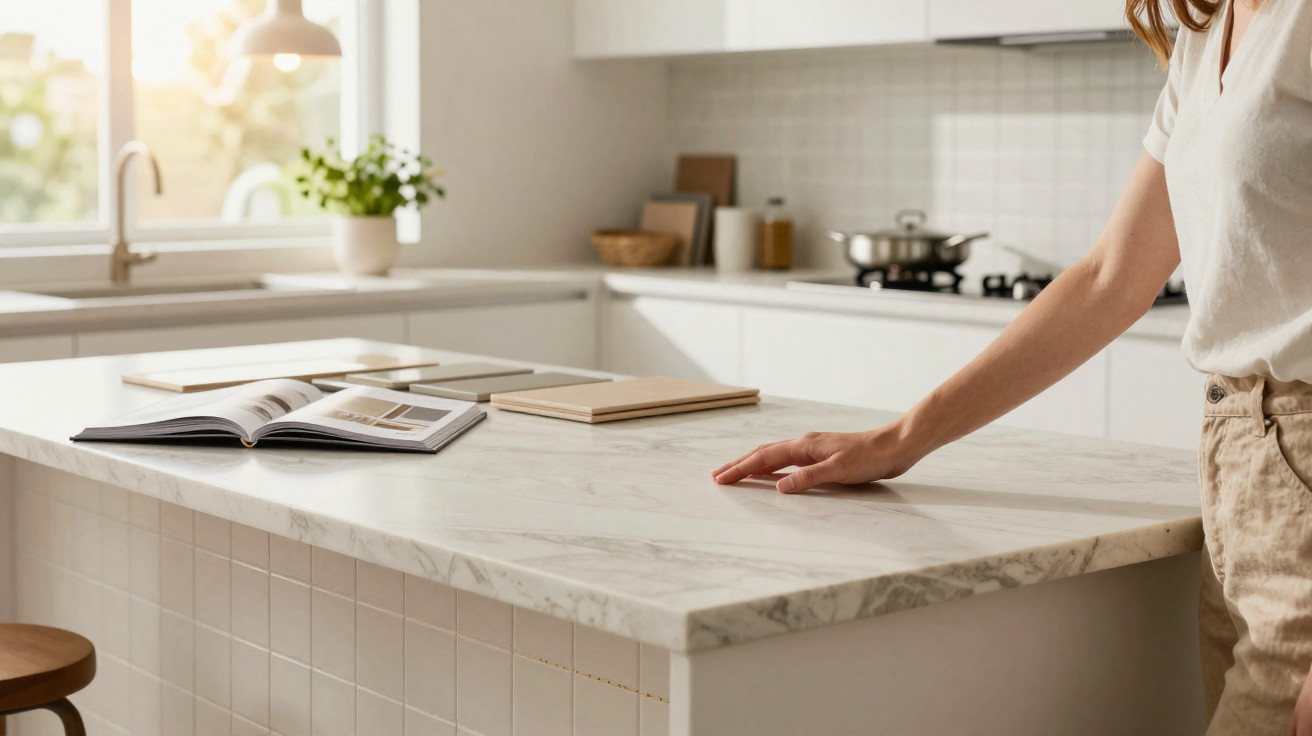
Tiled worktops became linked with older kitchens because dirt builds up in the grout, the joins remain visible, and tiles may crack following an impact or temperature changes. In contemporary designs, large-format porcelain is used as a more hard-wearing alternative, providing an almost seamless surface, low water absorption and easier cleaning around the sink and hob.
Why have tiled worktops fallen out of modern kitchen designs?
Tiled worktops have not vanished entirely, but they are less common in fitted kitchens. The main reason is the joints: grout darkens, absorbs grease, collects food debris and needs regular upkeep to prevent staining.
Durability is another consideration. Every small tile creates an edge and a join, increasing the chance of chips, water ingress and uneven areas around the food-preparation space. On a worktop used every day, these minor defects soon become noticeable near the sink, hob and edges.
Which material is replacing tiles on worktops?
Large-format porcelain is among the most widely used alternatives to tiles for kitchen worktops. It makes it possible to create broad surfaces with very few joins, a consistent finish and an appearance resembling marble, polished concrete, natural stone or concrete.
In everyday use, the distinction is clear. Rather than using numerous small tiles with grout between them, the worktop is formed from larger slabs, cut to the dimensions of the design and fitted onto a properly level base.
Why is large-format porcelain more resistant to heat?
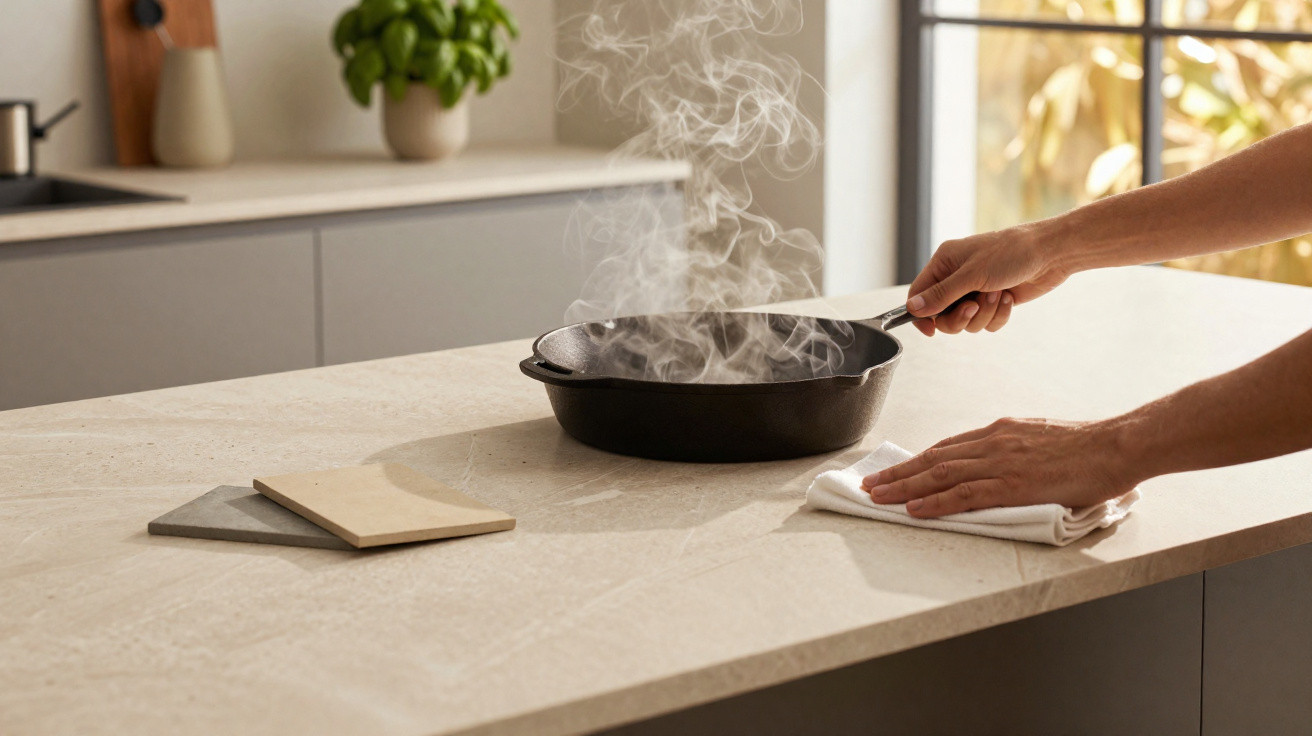
During manufacture, large-format porcelain is fired at high temperatures, producing a hard, dense and low-porosity surface. This composition helps it withstand the usual heat encountered in a kitchen, including steam, warm pans, splashes and its proximity to the hob.
Despite its resistance, pans taken straight off the heat should not be placed directly on the worktop. Some precautions remain important to protect the edges, finish and technical grout joints:
- Use a pan stand for very hot cookware.
- Avoid thermal shock from ice or cold water on a heated area.
- Do not knock heavy pans against the worktop corners.
- Select a thickness and supporting structure suitable for the span size.
How do you choose the right model for the kitchen?
The decision should take account of the finish, thickness, slab size and edge type. For a kitchen worktop, satin-finish porcelain is generally safer than polished porcelain, as it conceals everyday marks more effectively and appears less slippery in wet areas.
Before finalising the project, it is worth comparing factors that affect durability and cleaning:
- Larger slabs reduce the number of visible joins.
- Satin finishes reveal fewer fine scratches than highly glossy surfaces.
- Mid tones help conceal splashes, crumbs and cloth marks.
- Well-finished edges prevent chips around the sink and at the ends.
- Professional installation lowers the risk of cracking caused by an inadequately supported base.
Can it be adapted without renovating the whole kitchen?
In many kitchens, tiled worktops can be replaced without altering every cabinet and wall finish. The installer must assess whether the existing base can support the new weight, whether there is old water ingress, and whether the worktop height can accommodate a new surface without affecting the sink, tap and hob.
The cost is usually higher than a basic solution using standard tiles, but lower than some natural stones and premium ultra-compact materials. When large-format porcelain is installed correctly, the worktop has less exposed grout, quicker cleaning and a continuous appearance for a kitchen used every day.


Comments
No comments yet. Be the first to comment!
Leave a Comment