
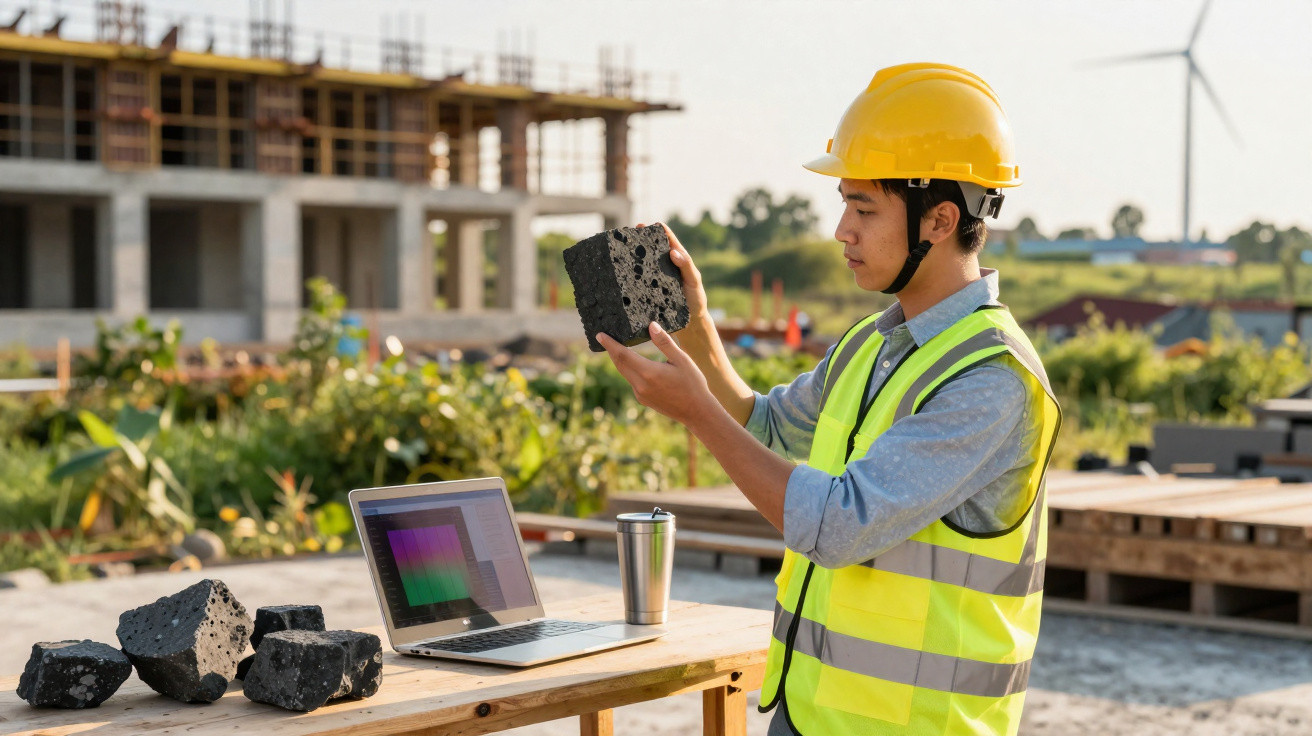
The search for greener alternatives in construction has gained an unexpected ally from volcanic rock. This innovative approach seeks to replace limestone with calcium-rich materials, dramatically cutting gas emissions from cement manufacture and reshaping modern sustainability.
Why does conventional cement have such a major environmental impact?
Traditional production requires limestone to be fired at exceptionally high temperatures. The process consumes vast amounts of thermal energy while releasing the carbon stored in the rock itself, making the sector one of the world’s largest sources of greenhouse gas emissions.
Even if industrial kilns used clean energy sources, the chemical release of carbon contained in the original rock would continue. The following key facts and indicators illustrate the environmental scale of current global concrete production.
- High emissions: Manufacturing this material accounts for around 4.4% of global greenhouse gas emissions.
- Comparable impact: The total volume of pollutants produced is equivalent to the impact of all passenger cars worldwide.
- Reliance on limestone: Limestone is the main source of calcium, but it chemically releases CO2 when heated.
- Extreme heat: Industrial processes require kilns to reach temperatures above 1,500°C.
- Worldwide use: This essential material underpins buildings, bridges, roads and dams around the world.
How can basalt replace the traditional construction raw material?
The scientists’ proposal centres on using basalt and gabbro instead of ordinary limestone. These volcanic rocks are plentiful in the Earth’s crust and offer the advantage of supplying the required calcium without containing carbon in their structure.
The central aim, therefore, is not to create an entirely new formula for modern construction. Instead, the practical intention is to extract the essential chemical element from these silicates to produce precisely the same commercial Portland cement already used by the global industry.
What energy benefits does this innovation offer for basalt cement?
Projections suggest that production using silicates needs less than sixty per cent of the energy consumed by the conventional limestone-based method. This reduction marks a major step towards establishing sustainable, low-carbon construction.
Emissions data
Dramatic CO2 reduction
When natural gas is used as the primary fuel to fire basalt, minimum emissions per tonne fall substantially.
The figure drops from 609 kilograms of carbon dioxide to a remarkable range of between 43 and 59 kilograms.
Even when operating with today’s polluting energy mixes, the method could reduce usual gas emissions by more than a quarter. This encouraging outlook highlights crucial points about its environmental efficiency and the substantial projected fall in greenhouse gas emissions.
- Emissions fall by more than twenty-five per cent even when conventional fossil fuels are used.
- It directly addresses the chemical carbon dioxide released during the thermal breakdown of traditional rocks.
- Total energy use is significantly reduced during the material’s industrial processing stage.
What challenges must industry overcome to adopt this rock?
Basalt’s abundance does not mean that deposits are located close to existing cement plants. The sector’s entire logistical infrastructure has been built around limestone quarries, so substantial transport changes would be needed to accommodate this new mineral rock.
In addition, silicate rocks have a lower calcium concentration than conventional limestone. Mineral refining requires further complex stages, creating specific technical barriers that may hinder the immediate adoption of new production methods in construction.
- Calcium from silicate rocks must be concentrated through more complex industrial processes.
- The traditional construction sector has operated with the same quarries for more than a century, creating institutional inertia.
- Suitable basalt deposits may not be immediately accessible logistically from processing plants.
How could this shift transform other industrial sectors?
Using basalt in full offers an exceptional, hidden economic advantage for industry. Because the rock also contains iron and aluminium, these valuable elements can be recovered as co-products during chemical processing, supplying steel and metal markets.
This integrated approach supports greater overall industrial efficiency while generating minimal waste for disposal into the environment. It represents a genuine transformation that can connect distinct supply chains, create substantial profits and reinforce the decisive progress of ecological development in contemporary industry.
References: Silicate-derived calcium as a pathway to low-carbon Portland cement | Communications Sustainability






Comments
No comments yet. Be the first to comment!
Leave a Comment