
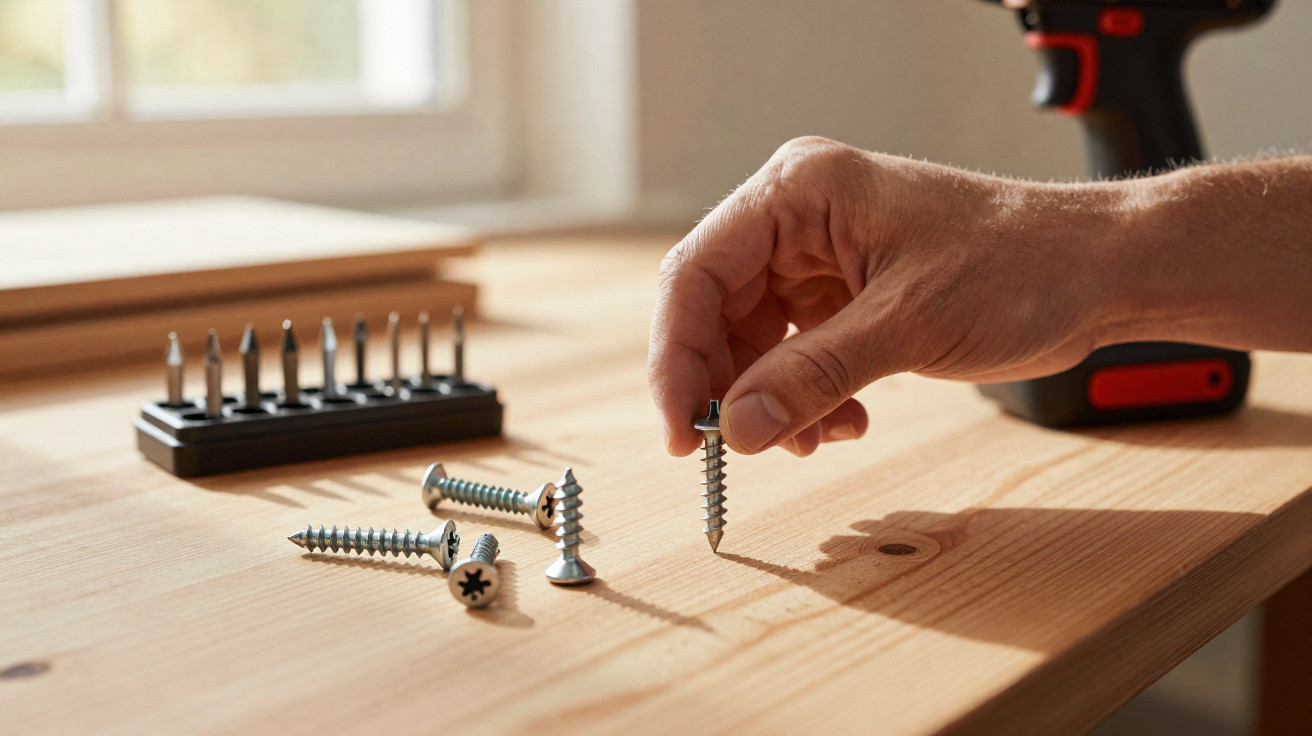
The slots in screw heads may look like a minor detail, yet they completely affect how every screw is tightened or removed. The right drive determines how much force and precision can be used without slipping or damaging the head.
Why do screws have different slots in their heads?
The main reason is practical rather than decorative. Each task calls for a different degree of grip, strength and control: assembling a simple piece of furniture is not the same as securing a component exposed to vibration, strain and constant pressure during use.
These slots also dictate which tool is required and how easily the screw can later be fitted or removed. In many instances, the drive design reduces slipping while improving torque transfer and stability.
This becomes clearer when looking at what each design does:
- Practical function: the head is designed to improve tool engagement and make tightening easier.
- Correct tool: every slot requires a specific driver for safe working.
- Greater torque: certain designs withstand more force without damaging the screw.
- Specific application: one type will not perform equally well in every situation.
- Additional protection: some models make removal harder for anyone without the correct tool.
How does the head design affect tightening and removal?
A better tool fit makes it easier to apply force without it slipping out of the slot or “chewing up” the screw head. This matters when fitting and removing screws alike, as it provides better control and limits wear.
Some types are intended to sit flush with the surface, whereas others focus on providing greater strength while being tightened. There are also designs made to prevent removal with ordinary drivers, improving security and making unauthorised access more difficult.
What is each common type of screw slot used for?
Among the best-known designs, each meets a different need. The slotted drive suits straightforward adjustments, while cross-head, star-shaped and internal hex drives were developed to provide greater grip and efficiency across a range of applications.
The most widely used drives
Each head design addresses a different problem. The slotted drive is traditional, but it can slip easily when greater force is applied. Phillips and Pozidriv drives provide improved centring and grip for everyday jobs.
Torx enables higher torque to be applied without wearing the head, Allen supports secure joints, and external hex heads are used for heavier-duty work.
In practice, recognising these differences prevents makeshift solutions that can damage both the tool and the screw. Rather than selecting a screw solely by size, it is worth checking the head shape to ensure proper engagement and better performance throughout the job.
The main types mentioned are:
- slotted drive, for basic adjustments and simple jobs;
- Phillips, commonly used for everyday assembly and repairs;
- Pozidriv, offering more grip than a conventional Phillips drive;
- Torx, Allen and hex drives, used where greater force is required.
Where is each type of screw most useful?
Everyday screws are widely found in furniture, plates and household objects, while more robust designs are used on bicycles, cars, machinery and metal components. In these settings, high torque and firmness become priorities.
Special models also appear in domestic appliances, electronics and public areas, where security carries more weight. In such cases, the distinctive head is not only intended to tighten more effectively: it also makes unauthorised removal more difficult and preserves integrity and protection.
This choice is particularly relevant in situations such as:
- furniture and household repairs, using Phillips and Pozidriv drives;
- bicycles and mechanical components, using Allen or Torx drives;
- metal structures, using hex-head screws;
- electronics and public spaces, using less accessible models.
Why should you check the slot before tightening any screw?
Many people only notice the difference once a driver slips or the head starts to wear away. However, as the explanation of screw slots and the purpose of each one shows, this detail determines the result and security of the work.
Ultimately, a screw head changes more than the appearance of the component: it affects how it performs in real-world use. Choosing the correct drive means working with greater precision and less wear, whether on a simple piece of furniture or a demanding structure.





Comments
No comments yet. Be the first to comment!
Leave a Comment