
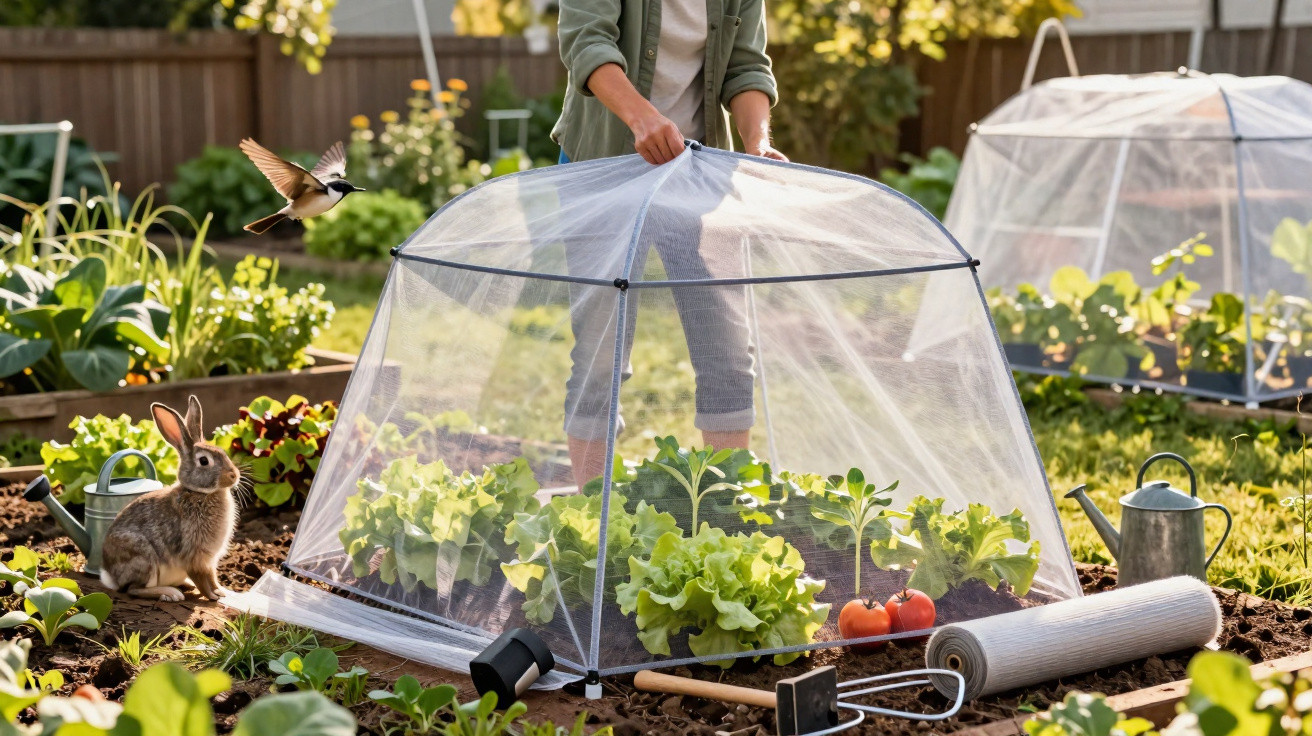
Growing fresh food in a residential garden can be challenging when pests and small birds feed on tender leaves every day. Installing physical barriers provides a sustainable way to maintain continuous productivity in vegetable beds without using harmful pesticides in the vegetable garden.
How do protection cages work in home growing?
A growing cage works by forming a protective shield that fully encloses the plants’ space. This framework prevents flying insects and hungry birds from reaching the crops, allowing vegetables to achieve full development without reducing the essential sunlight they need.
As well as excluding airborne predators, the cover creates a favourable microclimate by retaining some ambient moisture and softening the effects of strong winds. This sheltered setting lessens the thermal stress experienced by young seedlings, encouraging even growth and leaves with excellent nutritional quality.
How can caterpillars be kept off kale naturally?
Applying a homemade plant-based spray acts as an effective leaf repellent, creating immediate biological protection shortly after… Read more
Why does a physical barrier reduce the need for pesticides?
By mechanically preventing caterpillars, beetles and shield bugs from entering, the structure removes the need for repeated chemical insecticide applications. Avoiding these synthetic substances preserves the garden’s biological balance, enabling much cleaner harvests that are completely safe for family consumption.
Reducing chemical compounds also protects the soil microbiota and prevents rainwater on the plot from becoming contaminated. The grower produces genuinely organic food with less maintenance, harvesting strong vegetables that retain their authentic natural flavour.
Below is a video from The Home Garden YouTube channel demonstrating how this structure works in practice:
Which materials make an effective protection structure?
Building this protective barrier calls for sturdy frames and fine mesh designed to withstand ongoing exposure to the weather. Flexible tubing or metal connectors provide the stability required to resist wind gusts, keeping the fabric taut across the entire home vegetable bed.
The chosen fabric must let sufficient daylight and rainwater through while preventing crops from overheating inside. Side zips or movable openings provide easy daily access for watering, pruning and harvesting without compromising the planting area’s isolation.
Essential structure components
Assembly materials
The key elements for creating a durable vegetable garden cover are:
- A lightweight but firm frame made from durable tubes or connectors;
- Breathable mesh that keeps out insects and birds;
- Ground fixings and zips to make day-to-day care easier.
How should it be installed correctly in the garden?
Assembly begins by levelling the soil and securing the supports properly around the vegetable bed. Firmly positioning the stakes prevents gaps at ground level from becoming entry points for rodents and small crawling animals during cultivation.
Once the main frame is in place, spread the protective mesh evenly and secure its edges to the ground with suitable staples. This complete seal preserves the enclosed area, providing a dependable barrier and a fully safe environment for the vegetables.
A few practical installation measures extend the system’s lifespan:
- Secure the mesh ends firmly into the soil to prevent unwanted openings.
- Check the fabric tension regularly to stop rainwater from collecting.
- Clean the surface with clean water to maintain consistent sunlight transmission.
What benefits does this system bring to the grower’s routine?
Using this physical method greatly simplifies everyday crop care, saving time and resources otherwise spent on spraying. The gardener gains peace of mind knowing that vegetables, fruit and herbs are growing safely, protected from damage caused by birds and chewing insects.
The final harvest is a direct reflection of this preventative care, producing fresh, healthy vegetables entirely free from unwanted toxic residues. This approach makes home food production a sustainable and highly rewarding practice, strengthening the food security of the whole family.

Comments
No comments yet. Be the first to comment!
Leave a Comment