
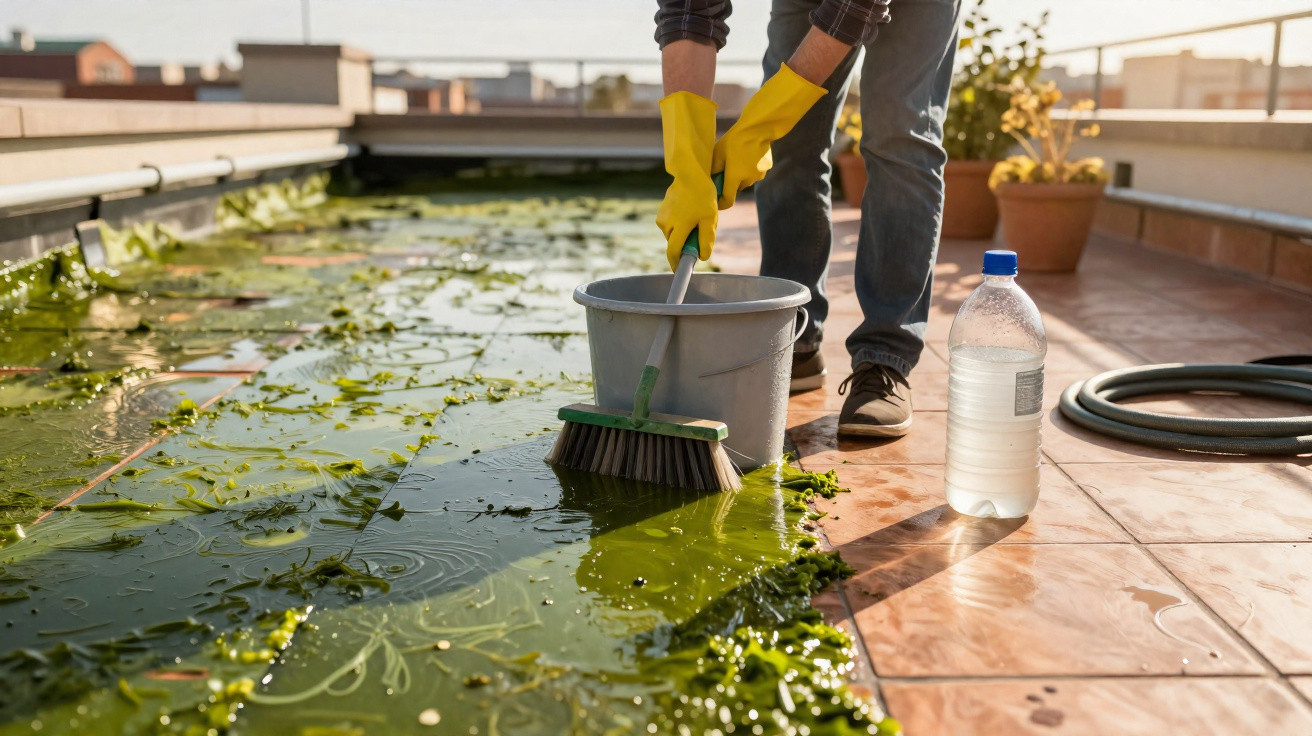
After winter, the patio at home can quickly resemble a green skating rink – but an inexpensive kitchen staple can rescue it surprisingly quickly.
Many homeowners get a shock in spring: the spot that hosted relaxed barbecues in late summer is now covered by a slippery greenish layer. Before reaching for a pressure washer or costly specialist cleaner, it is worth checking the kitchen cupboard. A familiar household remedy can restore secure footing far more quickly – without scrubbing until exhaustion.
Why patios become so slippery after winter
Months of rain, limited sunshine and lingering damp put patio surfaces under real strain during winter and wet transitional periods. Algae and moss thrive wherever water drains poorly and air circulation is limited.
Leaves and dirt create a thin layer that holds moisture. Micro-organisms settle on it and gradually turn it into a greenish film. The shadier the patio, the faster this happens.
“A welcoming seating area can therefore become an almost invisible danger zone – merely unattractive in appearance, but seriously hazardous when someone takes their first step on it while it is wet.”
Older people and children in particular can slip easily, as the smooth coating often goes unnoticed until an accident has already happened. Waiting for it all to dry out “on its own” risks even more growth: moss becomes denser and dark marks work their way into the pores of the paving.
The inexpensive kitchen secret
Rather than using harsh chemicals, many gardening and household experts swear by something almost everyone already has: ordinary household vinegar – more precisely, colourless alcohol vinegar with a higher acid content, often sold as “cleaning vinegar” or “household vinegar”.
The reasoning is straightforward: its acetic acid content attacks the thin nutrient film that moss and algae cling to. Their fine structures loosen, the coating loses its grip and becomes much easier to remove.
“The trick is not to scrub with brute force, but to let the acid work for an hour – then a brief pass with a brush is usually enough.”
According to reports from users in the United Kingdom, a bottle there costs the equivalent of around 30 cents. A standard patio often requires less than half a bottle. Prices in Germany are generally slightly higher, but this remains an exceptionally cheap option compared with specialist products from DIY shops.
Step-by-step guide: make a patio safe in one hour
Anyone wishing to try this method should take a structured approach. The routine below is suitable for many patios made of concrete, porcelain stoneware, clinker and standard paving blocks.
Preparation: clear the area and work when it is dry
First, remove furniture, plant pots and decorative items from the surface. This allows the mixture to reach every critical area.
- Sweep away loose dirt, leaves and small twigs with a broom.
- Brush off loosely attached clumps of moss so that the surface is clear.
- If possible, choose a dry or only slightly damp day so the solution is not diluted immediately.
The mixture: ratio and temperature
A simple mixing ratio is sufficient for cleaning:
- 1 part household vinegar
- 1 part hot or very warm water
Warm water improves the effect because it helps the solution spread into pores and narrow gaps. A watering can or garden pressure sprayer makes it easy to apply the mixture.
Apply, leave to work, then brush briefly
This is the time-saving stage:
- Pour or spray the solution generously over every green, slippery area.
- Leave it to work for around one hour – do not walk on the surface during this time.
- Lightly go over the area with a scrubbing brush or a broom with stiff bristles.
- Finally, rinse thoroughly with plenty of clean water so that no acid residue remains.
If there is an outdoor tap near the patio, simply use a garden hose. Heavily soiled areas may need a second treatment, although one cycle is generally enough to produce a clearly visible improvement.
Common mistakes that can ruin the result
Although this method sounds simple, several points require attention. Otherwise, marks or damage to the surface may result.
Protect delicate materials
Acetic acid reacts strongly with calcareous stone. It should not be used on the following surfaces, or should only be used after consulting a professional:
- Marble
- Travertine
- Other limestone and many cast stones containing lime
- Untreated timber or pressure-treated decking where the manufacturer advises against it
If in doubt, test the mixture in an inconspicuous spot. If dull patches, efflorescence or discolouration appear, the surface is unsuitable.
Do not overlook plants and joints
The solution affects more than moss; it can also affect other plants. Therefore:
- Cover or avoid flower beds, lawn edges and delicate potted plants along the perimeter.
- After rinsing, make sure runoff does not flow continually into a flower bed.
One practical side effect is that small weeds in the joints between slabs are often weakened at the same time. They dry out more quickly, making joint maintenance easier.
How often the treatment is worthwhile
One thorough clean in spring will usually keep the patio clear for several months. In shaded, damp locations, the coating may return sooner. In these situations, apply the method at shorter intervals and also improve ventilation around the area.
A few straightforward measures can considerably slow growth:
- Remove leaves regularly instead of leaving them in place throughout winter.
- Position planters so that water cannot collect underneath them.
- Keep gutters, downpipes and drains clear to prevent overflow.
- When planning a new patio, aim for adequate exposure to sunlight where possible.
Where this method reaches its limits
The vinegar mixture will only partly remove heavily encrusted marks, old rust stains or greasy barbecue residue. In these cases, additional products such as specialist stone cleaner, or occasionally a pressure washer used carefully, can help.
On old porous surfaces with crumbling joints, excessive water pressure can cause more damage than cleaning. Here, a watering-can vinegar solution has an advantage because it works gently and does not need to roughen the surface to release algae.
The technical reason behind algae and moss growth
Mosses are simple plants without roots that need very few nutrients and favour moisture. They attach themselves to stone surfaces using tiny anchoring structures. Algae are not actually land plants, but they are similarly undemanding and use moisture and light to grow.
As soon as a thin layer of organic debris forms – from pollen, dust, flower remnants or fine soil, for example – they have an ideal base. This is precisely the layer attacked by the acid, causing them to lose their hold. The plants themselves are damaged, dry out after treatment and can then be removed more easily.
Safety, children and pets
Compared with many harsh chemical products, household vinegar is considered mild. Even so, children and pets should not walk across the area while the solution is working, to avoid skin or eye irritation and to prevent streaks being made in the still-wet solution.
After thorough rinsing with water, there is generally no relevant acid residue left on the patio. As a precaution, move pet bowls aside briefly and return them once the cleaning has been completed.
Anyone with sensitive skin should wear rubber gloves. A basic face covering is usually unnecessary outdoors, provided the vinegar is not sprayed in concentrated form.
Other outdoor uses
The same principle also works elsewhere around the home: on paved garden paths, driveways or steps leading to the entrance, provided the material is suitable for treatment. On vertical surfaces such as walls, the solution can be applied with a spray bottle, with a similar contact time.
Those who barbecue frequently on the patio can, after cleaning algae, also wipe down the table, handrails or barbecue area with a heavily diluted mixture. Grease and soot residues lift more easily, as long as sensitive materials such as natural stone or certain metals are not involved. This turns a simple household remedy into a versatile helper for outdoor spring cleaning.
Comments
No comments yet. Be the first to comment!
Leave a Comment