
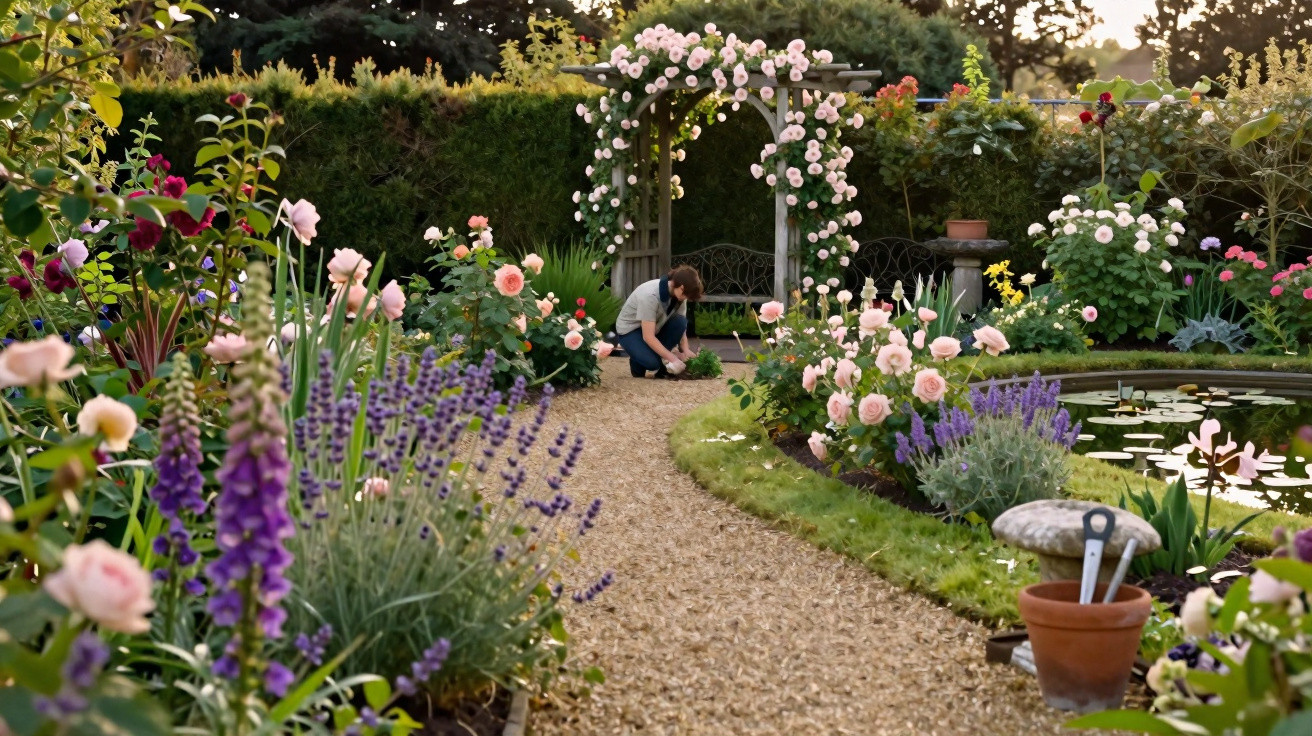
The search for a lush natural retreat finds its ideal answer in traditional British landscape design. By combining formal structure with the freedom of wild growth, you can create a romantic atmosphere that blends seamlessly with your area’s rich biodiversity.
How can you arrange abundant borders harmoniously?
The key to traditional English borders lies in the depth of the planting area. Plants should be grouped into large, repeated numerical blocks throughout the space, ensuring a striking, high-impact display in every climatic season.
Arrange each species in tiers according to its eventual size as well. Position the tallest specimens at the back, place medium-sized plants in the middle and keep lower varieties at the front, creating a flowing gracefulness that highlights floral exuberance.
How can you save bees while reducing water use in the garden?
Growing suitable plants draws pollinators that are vital to the ecosystem, while smart management techniques greatly cut water waste… Read more
Which structures bring vertical charm to the garden?
Vertical features are essential for adding romance and depth to a domestic setting. Attractive timber structures provide the perfect support for the vigorous growth of climbers and fragrant roses, creating a captivating focal point for your cherished visitors.
When planning these overhead routes, remember to plant young specimens on both sides of the posts to achieve even coverage. Proper pruning and openings at the top allow sunlight through effectively, supporting development and ensuring abundant flowering.
To gain a clearer understanding of these transformations and see British arrangements in real detail, watch the excellent audiovisual feature below, produced especially by The Middle-Sized Garden (YouTube) on YouTube, which explores the points discussed in this subject in greater depth:
How can you create mysterious corners and inviting paths?
Dividing the garden into separate themed areas, known as rooms, enriches the experience of exploring the outdoor space. You can begin with a harmonious transition close to the house, using geometric paving to organise the residential social space elegantly.
As visitors move further from the house, the mood should become deliberately wilder and more connected to native nature. Winding paths ought to spark curiosity, leading people towards resting spots furnished with sculptures or furniture that provide comfort.
English Garden Kit
Structural Elements
Three crucial components that lend authenticity to your classic design:
- Large sculptures, strategically positioned to guide the eye;
- High-quality, comfortable benches that serve as works of art;
- Clearly defined paths connecting the various outdoor themed sections.
How can you incorporate hedges and artistic touches?
Adding hedges provides a firm foundation for the garden throughout the year. These green structures work particularly well in winter by maintaining interest, while also offering beautiful contrast to the colourful explosion of sunny summer.
You may also include handmade sculptures or small monuments created from readily found reclaimed materials. Decorative features made from rustic stones or fallen logs add considerable eccentricity, emphasising the character of your landscape work while encouraging local wildlife life.
Organising a distinctive outdoor space requires attention to several practical details that preserve the plants’ ongoing beauty throughout the year. The following essential elements will help establish your residential project:
- Selecting plants suited to shaded areas;
- Using species that tolerate damp soil;
- Grouping simple geometric topiary forms.
What is the importance of lawns and water?
Unlike informal borders, a generous lawn plays a crucial role by providing a calm visual pause. In temperate climates, lawns made up of native species efficiently absorb atmospheric carbon and retain rainwater, acting as a tool for the ecosystem.
Finally, introducing an active water feature attracts amphibians that help with natural pest control. Small raised ponds or ornamental tanks complete the classic British look, bringing fauna and flora together sustainably in this domestic retreat.


Comments
No comments yet. Be the first to comment!
Leave a Comment