
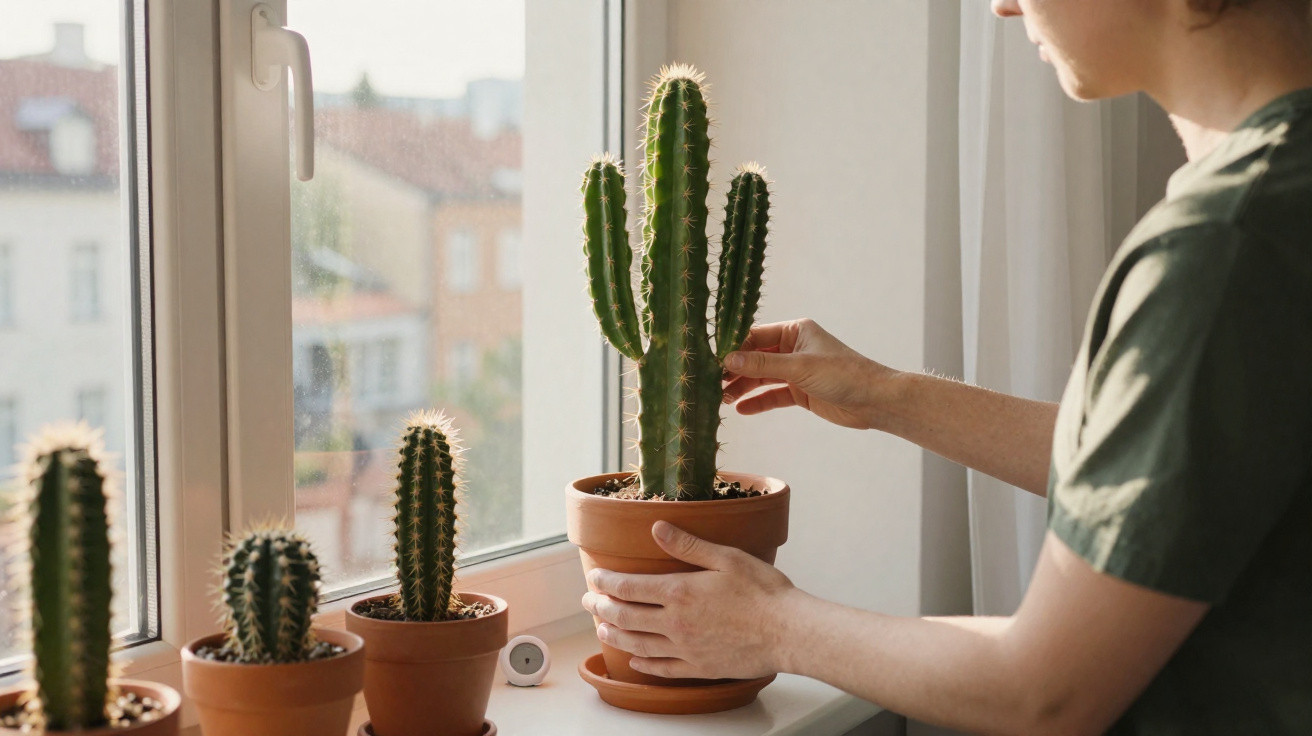
Keeping a resilient plant in a flat calls for particular care that many people overlook in everyday life. In Germany, residents manage to keep cacti healthy and vigorous for more than two decades by following a surprising and foolproof visual technique.
How do Germans safeguard the longevity of cacti?
Growing these species at home is often wrongly centred on factors such as compost or modern containers. Yet the real German secret to helping a plant exceed twenty years lies in continual attention to the plant itself, delivering genuinely impressive durability indoors.
Popular wisdom centres on choosing the right spot for the pot within the home. Moving the plant to another area without proper judgement can harm its development, so Germans assess its physical characteristics with particularly special care.
- Indoor placement: Keeping the cactus in the right place in the flat determines the plant's success.
- German tradition: Local methods favour close observation rather than ready-made solutions.
- ⏳ Long-lasting cycle: Reaching two decades of life demands patience and ongoing monitoring of the stem.
What is the real myth about pot drainage?
Many people believe that allowing water to drain perfectly solves every issue involved in growing plants at home. Although drainage is frequently discussed, European specialists show that success comes from regular monitoring of the stem, rather than from this drainage structure.
Relying entirely on the type of compost or the holes at the base of the pot is a common mistake. Lasting well-being comes from learning to interpret the biological messages the plant reveals through its revealing external colouration.
Why does stem colour determine a change of location?
A change in pigmentation at the base of the plant acts as a genuine gauge of climatic adaptation. This visible sign shows whether the internal structure can tolerate being moved to another space, making it a dependable indicator for the preservation of the species.
Visual Signs in Plant Tissue
Understanding Cactus Shades
The shade visible in the outer tissue directly reflects whether the cactus is ready to face new environmental conditions within the flat.
Assessing this chromatic characteristic prevents temperature shock and helps ensure that the plant continues to grow healthily for entire decades.
Understanding this natural process prevents hasty choices that cut short the lifespan of potted plants. The following essential points on continual colour monitoring can guide plant owners through these highly relevant factors:
- Check the colour at the base before changing the pot's position.
- Correctly interpret the biological signals given by the stem itself.
- Respect the time the plant needs to settle in its indoor environment.
How can you avoid mistakes when moving the plant around a flat?
Changing the pot's location without checking the condition of the stem often shortens a plant's life. German residents avoid abrupt changes in light, ensuring that the cactus remains healthy in its place through a highly efficient strategy.
A stable home environment directly supports the long-term resilience seen in these plants. Below are the main German guidelines for carrying out this handling process safely while maintaining a thoroughly appropriate routine.
- Visually assess the stem tissue before making any physical move.
- Avoid relocating the cactus purely for aesthetic or home-decoration reasons.
- Give greater value to biological signs than to ready-made growing instructions.
What are the benefits of constant observation?
Watching the plant carefully creates a deep connection with the real needs of the plant organism. This simple habit prevents incorrect assessments of the cactus's health, avoiding unnecessary spending on fertilisers and focusing on what delivers genuine, lasting vitality.
Growing species in flats for more than twenty years becomes a fully achievable goal with this method. German wisdom teaches us that interpreting stem colours protects cacti from harmful changes, encouraging entirely healthy growth.
Comments
No comments yet. Be the first to comment!
Leave a Comment