

The morning has the scent of rain, even though none has fallen for days. You are standing barefoot in the garden with a mug of coffee, looking at something that is quietly driving you mad: your lawn. You watered for ages last night, leaving the hose stretched across the grass like a snake. Yet this morning, the lawn is still patchy, yellowish, dull and almost offended.
To the left, your neighbour’s lawn is rich and dense, as though it belongs in an advert. Along the pavement to the right, small scorched patches are spreading. You start wondering whether you have missed something: a secret lawn-care trick that everyone else seems to know.
How can something receive so much water and still look thirsty?
When water is not the answer
We all know that feeling when the sprinkler is running and we are already imagining a flawless lawn. The gentle ticking, the arcs of water: it all looks like proper care. Then, a few days later, yellow patches appear, like a bad mood after an overly long day at work.
In your mind, water seems the obvious fix. Dry conditions mean watering, job done. The surface of the soil looks damp, so it feels as though everything is under control. But honestly, hardly anyone checks how far that moisture has actually travelled into the ground.
Often, the trouble begins precisely when we believe we are doing everything correctly.
One image is hard to forget: a typical suburban terraced-house garden of 60 square metres. Its owner insists that he waters it “for an hour every evening”. The hose circles around, the water meter spins cheerfully and the water bill comes as a minor shock. Still, the lawn looks exhausted, blotched with yellow and almost straw-like in places.
A neighbour two houses away waters only twice a week. She spends less time and uses less water, yet her lawn looks as if it is being secretly fertilised. Her approach is simple: water deeply in the early morning, then leave it alone. The moisture reaches the roots instead of providing a little daily surface-level cosmetic treatment.
In this small street, two approaches collide: more is better versus infrequent watering done properly. The yellow lawn gives a fairly clear verdict on which one works.
A yellow lawn despite watering is frequently a sign of stress, not too little water. Shallow watering keeps roots near the surface, where they become complacent and have no reason to grow downwards. The top few centimetres dry out rapidly in sunshine, the roots follow suit, and the grass scorches.
Heat adds another problem. Watering at midday means much of it evaporates, while the blades can effectively be “cooked”. Alternatively, waterlogging may be the issue because compacted soil prevents water from penetrating deeply. The roots then sit in permanently damp socks and begin to rot.
So yellow does not automatically mean “water more”. It often means water differently: deeper and less often. Sometimes, it even means stopping for a while.
The real causes of a yellow lawn: soil, dogs and more
The first practical step does not begin at the tap, but in the soil. Use a spade to cut out a small section of lawn, perhaps 10 centimetres deep. What you find will tell you more than any product advert. Is the soil hard, grey and almost concrete-like? If so, your lawn has an air problem rather than a water problem.
Ideally, you will see fine white roots reaching well down into the ground. When roots are confined to the dry upper layer, they lack the incentive to grow deeper. The answer is targeted watering: give the lawn a thorough soak once or twice a week, allowing water to reach 15–20 centimetres into the soil. Then let it rest. Avoid a daily misting routine; instead, provide occasional, penetrating rainfall from a hose or sprinkler.
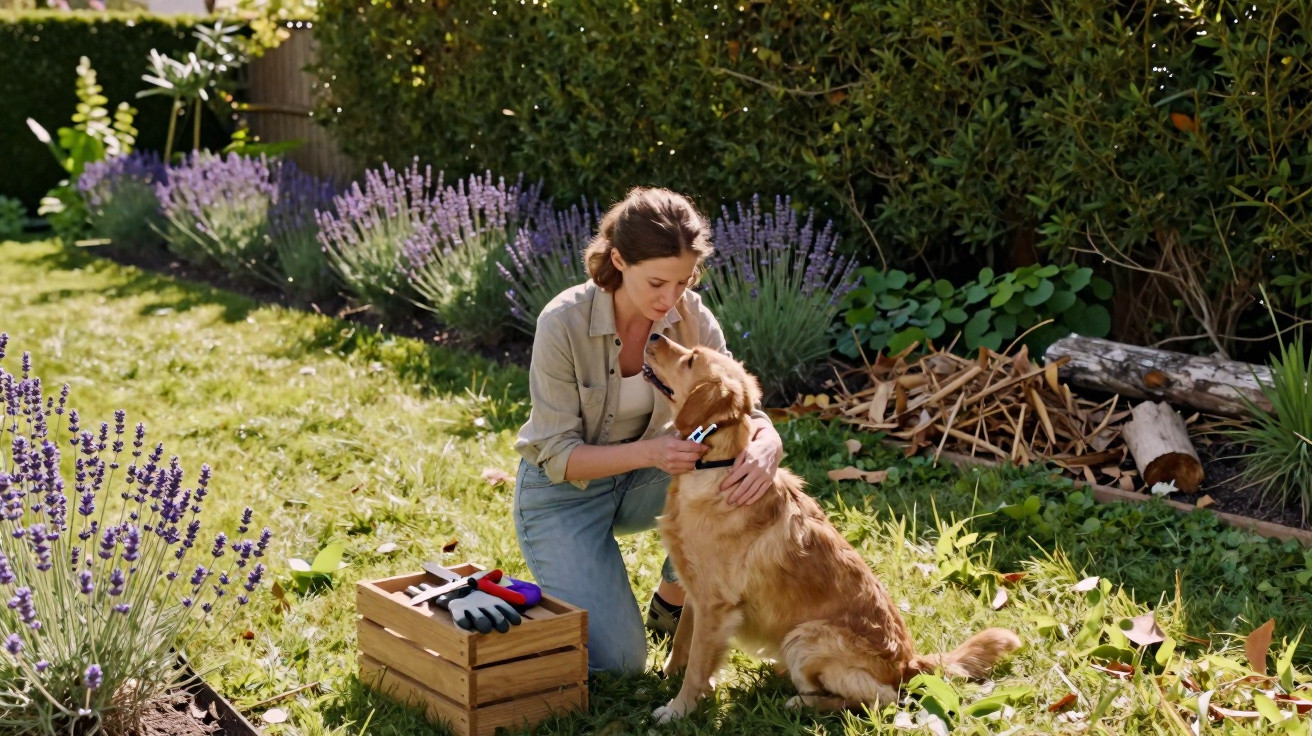
Many yellow areas also have an extremely ordinary cause: dogs. Their urine acts like concentrated fertiliser and can literally burn the grass where it lands. The familiar circular yellow spots with a darker edge are a classic sign. Items left on the lawn during summer can be just as problematic: paddling pools, furniture and sheeting. The grass beneath them is starved of air, and the blades turn yellow.
Let’s be honest: nobody clears the entire garden every evening. A conscious look around is enough to help. What has been resting there over the past few days? Where does the wheelbarrow always stand, and where did the barbecue sit for weeks? Such details often explain the mysterious yellow islands that persist despite watering.
Nutrient deficiency is another factor that is easily underestimated. Like us, grass needs a balanced “diet”: nitrogen for lush green growth, potassium for resilience and phosphorus for roots. If you have not fertilised for years, or fertilise completely at random, your lawn will gradually become undernourished. Yellow blades, thin growth and moss among the grass all show that water alone cannot solve the problem.
At the same time, too much fertiliser can scorch grass, particularly in hot weather. Anyone who quickly adds more in high summer risks stripes and patches resembling sunburn. The straightforward truth is that one simple, well-balanced slow-release fertiliser application in spring and early summer often works better than five impulsive purchases from the DIY shop.
How to restore your lawn step by step
When your lawn turns yellow, think in stages rather than panicking. First, change the watering routine. Water thoroughly every three to four days instead of giving it a quick drink each evening. As a guide, use around 15–20 litres per square metre, enough for the soil to still feel slightly damp between your fingers several hours later. Early morning, before the sun becomes strong, is ideal.
Try this once: place an empty jam jar within the sprinkler’s range. Let the sprinkler run until the jar contains about 15 millimetres of water; that is a good amount for one session. It may sound a little nerdy, but it can prevent yellow surprises.
Next, aerate the soil. A basic lawn aerator, a hand fork or even spiked shoes can make holes in a compacted surface. This allows water and oxygen to travel further down, and the roots can start working again.
A common first mistake is to overseed yellow areas immediately while the rest of the lawn is still stressed. It is better to stabilise things first: adjust the watering schedule, aerate the soil and perhaps apply a light fertiliser, then wait two to three weeks. Only once the lawn is responding overall is it worth overseeding bare patches.
The second common mistake is mowing too short. Many people habitually cut their lawn very low because “it takes longer before it grows back”. That may sound tempting, but it places severe stress on the grass. Leave the blades at 4–5 centimetres, or a little longer in high summer. Longer grass shades the soil, retains moisture and keeps the roots cooler.
There is also a quieter, very human mistake: we only react once the damage is visible. A lawn that has become completely yellow needs patience and time, much like a body recovering from burnout. It will recover, but not overnight.
“A lawn is not a carpet that you roll out once and then forget about – it is more like a quiet housemate that responds reliably when you treat it well over a long period.”
To stay on top of things, it helps to run through a short mental checklist before rushing for the watering can:
- Do I water infrequently but deeply, or do I only dampen the surface briefly every day?
- What is the soil like 10 centimetres down: loose, or hard as concrete?
- Has there been a lot of dog urine, furniture, paddling pools or sheeting on the lawn in recent weeks?
- When did I last fertilise sensibly, and what did I use?
- Could my lawn simply be too short and “bare” in the sun?
Why a yellow lawn can also be an invitation
At first, yellow patches in the lawn can feel like a small personal reproach: you are making an effort, yet it still looks neglected. People who work long hours, have little time and view the garden as a retreat can take that sight personally. Yet it also carries a quiet invitation.
A lawn encourages us to look more slowly. Rather than simply pouring ever more water onto it, take an honest moment with a spade, your hands and a little curiosity. Why is one spot green while another, two metres away, is yellow? What is really happening below the surface? The answers are often less complicated than they seem, while also being far more specific than any promise printed on a bag of fertiliser.
Perhaps good lawn care starts when we let go of the pressure for perfection. A few yellow patches can also tell stories of heatwaves, football games, children’s paddling pools, dogs and barbecue evenings. In other words, they are signs of life. With a little knowledge, a changed watering routine and a few calm practical steps, that yellow patchwork can become a living carpet again. This time, though, you will understand why it works. And when you have your next morning coffee, you will not have to stare helplessly at patchy grass: you will have a pretty good idea of what is happening beneath it.
| Key point | Detail | Benefit for the reader |
|---|---|---|
| Adjust the watering routine | Water less often but deeply, ideally early in the morning | Roots grow deeper, making the lawn more resilient and less yellow |
| Check soil and compaction | Carry out a spade test, aerate and loosen the soil if necessary | Improves water and air exchange, reducing waterlogging and root rot |
| Consider nutrients and use | Use targeted fertiliser and watch for dog urine, furniture and paddling pools | Helps identify the causes of yellow patches and take targeted action |
FAQ:
- Why is my lawn turning yellow even though I water it every day? Daily, shallow watering keeps only the top few centimetres moist. Roots remain shallow, the soil dries out quickly and the blades scorch in sunlight. A few thorough watering sessions are better.
- Can too much water also make a lawn yellow? Yes. If water remains in the soil for too long, oxygen is lacking and root rot develops. The lawn may then look yellow, soggy and sparse, often alongside moss.
- How can I tell whether my lawn has a nutrient deficiency? Typical signs include generally pale-yellow blades, slow growth and increased moss. If only individual, clearly defined patches are yellow, another cause is usually responsible, such as dog urine or pressure damage.
- When is the best time to water? Early morning. Evaporation is low, the grass blades can dry during the day and fungal diseases have less chance than they do with persistent dampness overnight.
- How long does a yellow lawn take to recover? Depending on the cause and the season, it may take several weeks to a few months. With adjusted watering, some fertiliser and a slightly higher mowing height, you can usually see clear progress within one season.


Comments
No comments yet. Be the first to comment!
Leave a Comment