
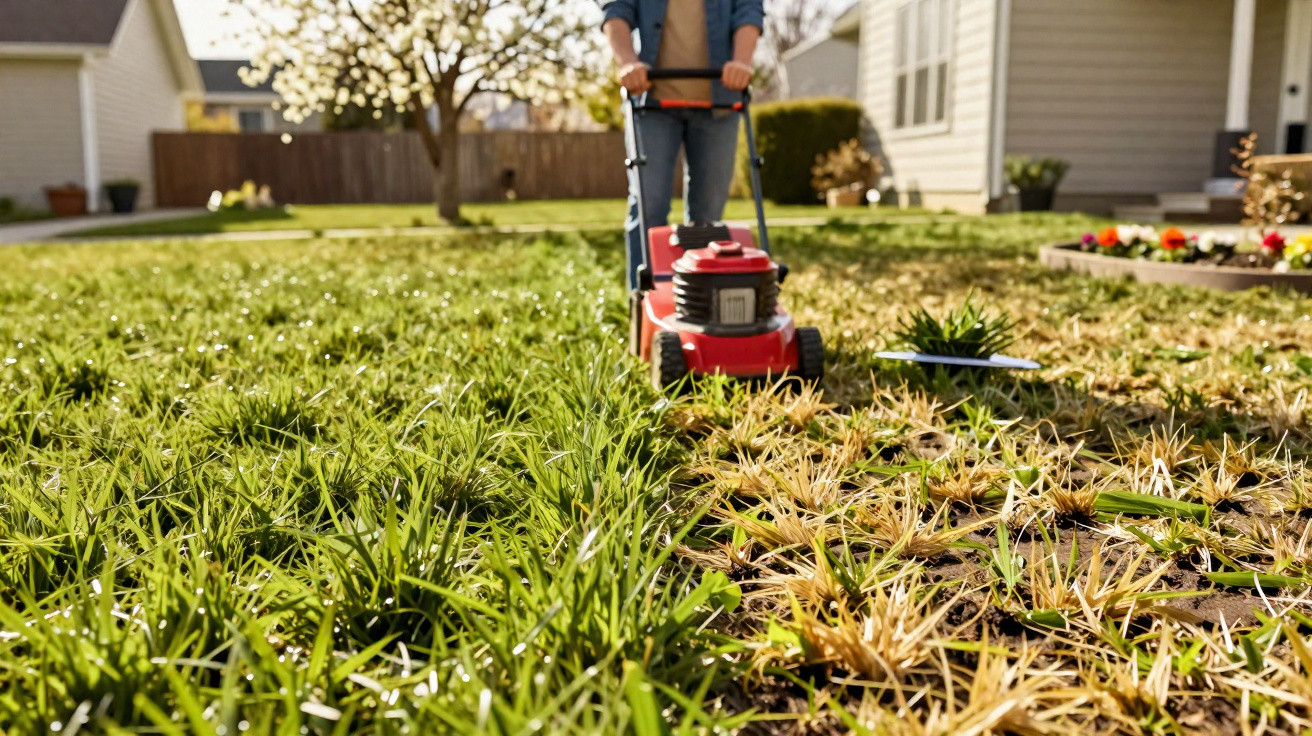
Winter has passed, the sun is appearing more often, and the view from the window reveals a slightly shaggy, pale-green lawn. This is precisely when lawnmowers start up in gardens across the country. Yet an action taken with good intentions can damage the lawn in the long term: mowing too early and too short deprives the grass of the energy it needs to form a dense, rich green carpet.
Why the first lawn cut in spring matters so much
During winter, a lawn behaves rather like it is hibernating. Grass growth almost comes to a standstill. Its leaves act as an energy store, helping the roots survive frost and wet conditions. In spring, the lawn urgently needs these reserves to begin growing again.
As temperatures gradually rise, the grass produces fresh blades, develops more root mass and becomes denser. This can only happen reliably when sufficient leaf material remains. Cutting almost everything off the lawn at this stage removes the solar panel it uses to generate energy.
“The first cut in spring often determines whether a lawn becomes dense and strong – or ends up thin, vulnerable and full of moss.”
There is another important factor: grass-root activity depends on soil temperature. Proper growth does not begin until the soil reaches roughly 6 to 7°C and daytime temperatures are around 10°C. Until then, the lawn is still relying on stored energy. A severe cut before this point is a major setback.
The most common mistake: mowing too early and far too short
The same thing happens in many gardens every year: as soon as the lawn grows a little taller, it is treated as though it were midsummer. The mower is set low, while the ground is still damp or clammy – and the damage begins.
Problem 1: The soil is still too cold or wet
If the ground is frozen, muddy or spongy, the mower’s weight compresses it. The turf suffers, the soil becomes compacted, and air and water can no longer reach the roots as easily.
Typical consequences include:
- yellowish, crushed grass blades
- bare patches where moss can spread
- sunken mower tyre tracks
- standing water and poorer soil aeration
These issues may seem minor, but they can cause problems throughout the season. Compacted soil dries out faster in summer and is more likely to develop thatch.
Problem 2: The cut is too severe
The other major error is cutting the lawn down to a close-cropped “carpet”. Many people set the mower as they would in high summer: short and as neat as possible.
Garden professionals instead recommend the one-third rule: remove no more than one third of the current growth height in any one cut. If the grass measures around 9 centimetres, it should still be about 6 centimetres high after mowing, rather than 3.
“A healthy spring lawn should remain at least 5 to 7 centimetres long. Cutting it shorter causes more harm than good.”
Mowing too low leads to:
- stressed grass with reduced energy reserves
- shallower roots that suffer sooner in dry conditions
- greater warming and drying of the soil surface
- more opportunities for weeds, because the ground is not shaded densely enough
The right preparation: when the lawn is truly ready for its first cut
Rather than following a calendar date, garden owners should look for clear signs. It is only worth reaching for the mower once several conditions are right at the same time.
The key signs that it is time for the first lawn cut
| Criterion | Guideline |
|---|---|
| Daytime temperature | Above 10°C for several consecutive days |
| Soil condition | Not frozen, not muddy and firm enough to walk on |
| Weather forecast | No overnight frost expected over the next few days |
| Lawn colour | Noticeably greener, with hardly any grey or brown blades |
| Growth height | Around 8 to 10 centimetres |
Checking these points makes it less likely that impatience will lead to poor decisions. In cooler areas, it is often worth waiting until late March or even April, while lawns in milder locations may be ready for mowing sooner.
How to set the lawnmower correctly for the first spring cut
Even ideal timing achieves little if the equipment is not set up properly. Many mowers run for years with blunt blades and an excessively low cutting height. The result is frayed blades and a lawn marked with brown patches.
Height, sharpness and pace: the three key settings
- Cutting height: Set the mower to a high setting for the first cut. Aim to leave at least 5 to 7 centimetres of grass height.
- Sharpen the blades: Blunt blades tear grass instead of cutting it cleanly. The tips turn brown and become more susceptible to disease.
- Mowing speed: Walk slowly and do not rush. A steady pace produces an even cut, particularly when the ground is slightly damp.
“A clean cut with sharp blades makes the lawn look noticeably healthier and lusher – even after the first mow.”
If unsure, inspect the result after the first few metres: are the blade ends smooth or ragged? Does the surface look even, or does it appear torn in places? If in doubt, stop the mower, raise the cutting height and try again.
A typical spring routine: what to do before the first mow
Before using the mower, it is worth giving the lawn a quick inspection. A few preparatory measures can make a substantial difference to the result.
These steps give the lawn a boost
- Clear away leaves and branches: Rake off loose leaves, twigs and dead plant material so that grass blades receive air and light.
- Mark mossy areas: Note places with dense moss so they can later be scarified or treated with sand where needed.
- Fill holes and dips: Level uneven areas with a little soil so the mower does not catch and damage the turf.
- Plan an initial feed: Depending on the soil, a first moderate application of fertiliser may be useful after the first or second cut.
Doing this preparation gives the lawn a head start. The grass grows more evenly, while the risk of yellow patches is reduced.
How a properly treated spring lawn pays off in summer
A gentle first cut, enough grass height and soil that has not been compacted are an investment in summer. The lawn develops deeper roots, draws water from lower soil layers and copes better with dry spells.
A dense, healthy lawn brings another benefit too: weeds and moss have less light and space available. Those who are patient in spring can save many hours of later work with a scarifier, overseeding and a watering can.
For many amateur gardeners, deliberately allowing the lawn to remain a little longer feels unfamiliar. However, anyone who does so will notice the difference after only a few weeks: the area looks lusher, withstands foot traffic better and stays green for longer in summer – even during hot periods.
One further point is often underestimated: different lawn types vary in how sensitive they are. Fine-bladed ornamental lawns tolerate severe cuts even less well than hard-wearing family lawns. Anyone with a particularly well-kept green space at the front of the house should therefore take extra care with the first cut and, if uncertain, mow again a little later rather than cutting it “short and sharp” straight away.
Those using their green space as a play area for children and pets also benefit from a gentle start: a strong lawn with well-established roots withstands footsteps, rough play and garden furniture far better than a short-shorn lawn stressed in spring. This gives the gardening season a stable foundation – and makes the view from the window a pleasure all summer long.






Comments
No comments yet. Be the first to comment!
Leave a Comment