
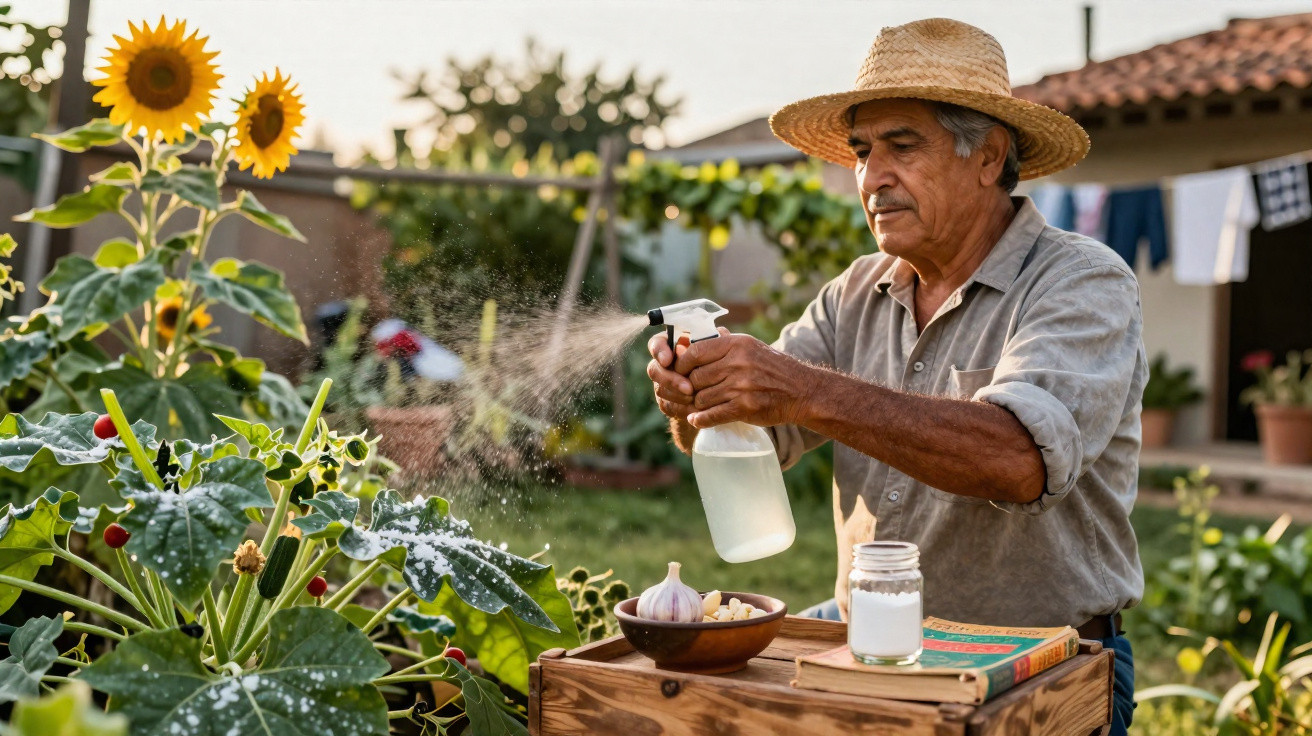
Anyone who has watched healthy tomato plants turn into brown skeletons within a few days knows how ruthlessly fungal diseases can strike in summer. During the 1970s, amateur gardeners turned to a blue mixture that became a regular weekend ritual in many villages and saved entire crops. This technique is now making a return – adapted to today’s environmental standards and combined with modern knowledge from organic gardening.
A nightmare in the vegetable patch: why fungal diseases strike so ruthlessly
Warm, damp summers provide ideal conditions for fungi that attack tomatoes, potatoes, grapevines and other vegetable plants. Rain, dew and foliage that dries slowly create the perfect breeding ground. Spores spread rapidly in the wind and through splashing water, settling wherever a plant is weakened.
Typical warning signs on tomato and potato plants include:
- yellow-brown spots on leaves, initially small but quickly enlarging
- leaves that curl, turn black and dry out
- stems that darken and become soft
- green fruit with dark, sunken patches that rot before ripening
Watering over the foliage in the evening or planting too closely together practically invites the disease to spread throughout the whole bed. In years like this, many gardeners give up in frustration and return to buying their tomatoes from the supermarket.
The good news is that experienced gardeners found a way to slow these fungal attacks significantly more than 50 years ago – often with remarkable success.
The blue mixture from grandmother’s era: the science behind copper treatment
What gardeners mean by the “blue brew”
At the heart of this traditional approach is treatment with a copper-based solution, usually known as Bordeaux mixture. This is a copper-based powder mixed with water and sprayed onto leaves and stems.
The principle is straightforward: the plant does not absorb the active ingredient; instead, it forms a thin coating across the leaf. When fungal spores land on that surface, they do not find favourable conditions for germination. It creates a kind of raincoat against fungal infection, particularly during wet weather.
Viticulture was already using copper in the 19th century, and many home gardeners adopted the technique for tomatoes, potatoes and cucumbers in the 60s and 70s. Saturdays meant mixing, spraying and hoping – often with visible results.
Why many gardens still use copper
Modern organic growing still uses copper products, although they are regulated far more strictly than they once were. The reason is that copper works reliably against many fungal diseases and, in small quantities, is considered an acceptable compromise between yield and environmental responsibility.
There is, however, a downside: copper is a heavy metal. It scarcely breaks down in soil and, if overused, can harm earthworms, soil fungi and other beneficial organisms below ground. This is precisely why specialists now recommend a clear three-part approach:
- use it sparingly
- make only a few applications each season
- always combine it with other plant-friendly measures
Copper can save the garden – when it is used precisely and sensibly, rather than as a permanent solution for convenience.
How home gardeners can use the old 1970s copper method correctly today
Mixing the blue protective solution: step by step
Simple equipment is sufficient for a classic home-garden treatment:
- a clean pressure sprayer with a capacity of around 10 litres
- 30–40 grams of copper product (Bordeaux mixture or a comparable treatment)
- a bucket and stirring stick
- gloves and basic respiratory protection
The process is as follows:
- Fill the bucket with cold water.
- Sprinkle in the powder gradually and stir thoroughly until no lumps remain.
- Pour the solution into the sprayer and use it immediately rather than leaving it to stand for hours.
- Always follow the dosage stated on the packaging; do not mix a stronger solution “just in case”.
Apply the mixture only to healthy plants or those at slight risk, never to stems and fruit that are already completely infected. Severely damaged plant material should go in household waste or be burnt, not added to the compost heap.
Timing determines whether the treatment succeeds or fails
Copper treatment works chiefly as a preventative measure. Those who spray only once tomatoes are covered in brown patches are usually too late. Many experienced gardeners follow these rules of thumb:
- make the first treatment shortly before a forecast rainy spell in late June or early July
- carry out further rounds only after prolonged periods of rain
- apply no more than five to six treatments in total per season
- spray early in the morning, when foliage is dry and there is no wind
The main plants treated are:
- tomato plants – from the young-plant stage through to fruiting
- potato beds
- grapevines and susceptible vegetables such as aubergines and cucumbers in wet summers
Those who keep an eye on the sky and take the weather forecast seriously use copper with purpose rather than blindly.
Avoiding common mistakes: getting the most from the method
Many misconceptions date from the time when people simply sprayed a little extra “to be safe”. Today, gardening advisers recommend clear rules:
- never treat plants in intense midday sunshine – it stresses foliage and can encourage scorching
- remove infected leaves as completely as possible before spraying
- lightly coat both the upper and lower leaf surfaces rather than soaking them until they drip
- leave sufficient space between plants so they can dry quickly after rain
Living soil rich in organic matter, a mulch layer and targeted watering directly at the roots also strengthen plants’ natural defences.
Experiences from modern gardens: how great the difference can really be
What gardeners in allotments and back gardens report
The copper method has seen a revival in many community gardens and allotment sites in recent years. Gardeners who had previously lost their entire tomato crops several times, in particular, report noticeable improvements.
Strategies that work well in these settings typically include:
- an initial treatment in early summer, followed by alternating protection using plant preparations such as nettle or horsetail
- consistently removing the lowest leaves from tomato plants so rainwater cannot splash upwards
- using tomato shelters or polythene covers so the foliage gets wet less often
Many report strong, continuous harvests well into autumn, even in rainy years when neighbouring gardens struggle to produce any fruit.
What can be observed on plants after treatment
With good timing, widespread dieback is usually avoided. Plants retain dense, healthy foliage for longer and produce more fully ripened fruit. Mildly infected areas can be contained rather than allowing the disease to advance unchecked up the plant.
Not a miracle cure, but a strong safety belt – that is how many describe its effect in their vegetable patch.
Copper alone is not enough: making the vegetable garden resilient for the long term
Protecting soil life and beneficial insects
Clear safeguards are needed to prevent copper building up in the soil. These include not using the full permitted annual amount, allowing longer intervals between applications and deliberately avoiding copper altogether on some areas. Patches of wildflowers, herbs and untreated perennials offer ladybirds, wild bees and other beneficial insects places to retreat.
| Measure | Benefit for the garden |
|---|---|
| Mulch layer of straw or grass clippings | keeps soil moist, protects soil life, reduces water splash |
| generous plant spacing | improves air circulation, allowing leaves to dry faster |
| choosing highly resistant varieties | lowers disease pressure and reduces the need for treatments |
| crop rotation and changing growing locations | reduces disease and pest pressure over time |
Natural additions: what else helps against fungal infection
Many home remedies have a lighter environmental impact and can extend the intervals between copper applications or even partly replace them. Popular options include:
- horsetail infusion: strengthens the cell walls of leaves
- garlic or onion extracts: create an unfavourable environment for fungi
- spray solutions containing a little bicarbonate of soda: alter the pH level on the leaf surface
There is also one factor that is often underestimated: looking closely every day. Gardeners who know their plants, spot small marks early and act at once need far fewer heavy-duty measures.
The old 1970s method works best as part of a complete system: resilient varieties, covered tomatoes, airy spacing, healthy soil – and copper only when the weather forecast signals fungal conditions that are likely to be critical. This keeps the blue mixture a useful tool without pushing the garden towards reliance on chemicals.
With this approach, many home gardeners regain not only their tomato harvest but also a piece of tradition: walking through the bed early on Saturday in wellington boots, bucket in hand, with the reassuring feeling of actively resisting the looming threat of fungal damage.


Comments
No comments yet. Be the first to comment!
Leave a Comment