
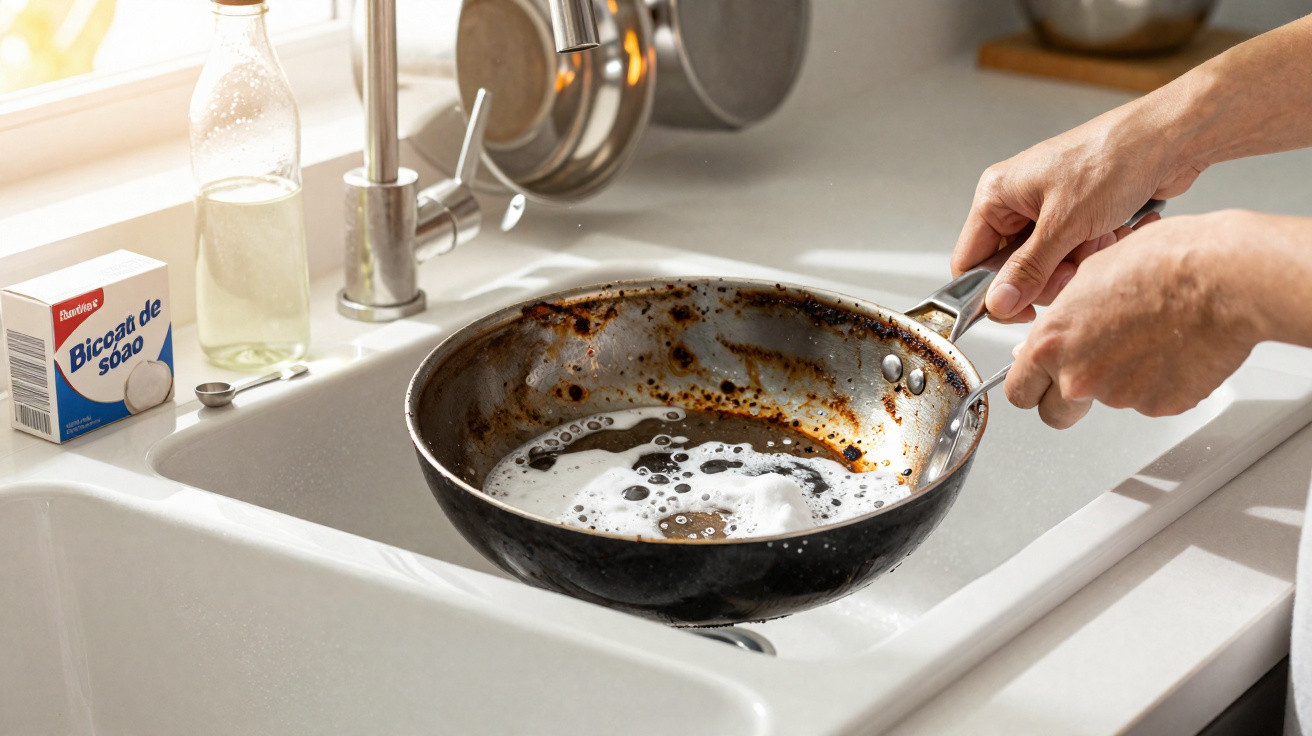
Washing a pan is one of those jobs that few people enjoy, yet everyone has to do. When food burns and leaves a thick crust on the base, it can feel like a punishment. At that point, water and washing-up liquid alone are rarely enough. This is where simple homemade mixtures made with household items can make cleaning easier without costing much.
What is the best homemade mixture for cleaning very dirty pans?
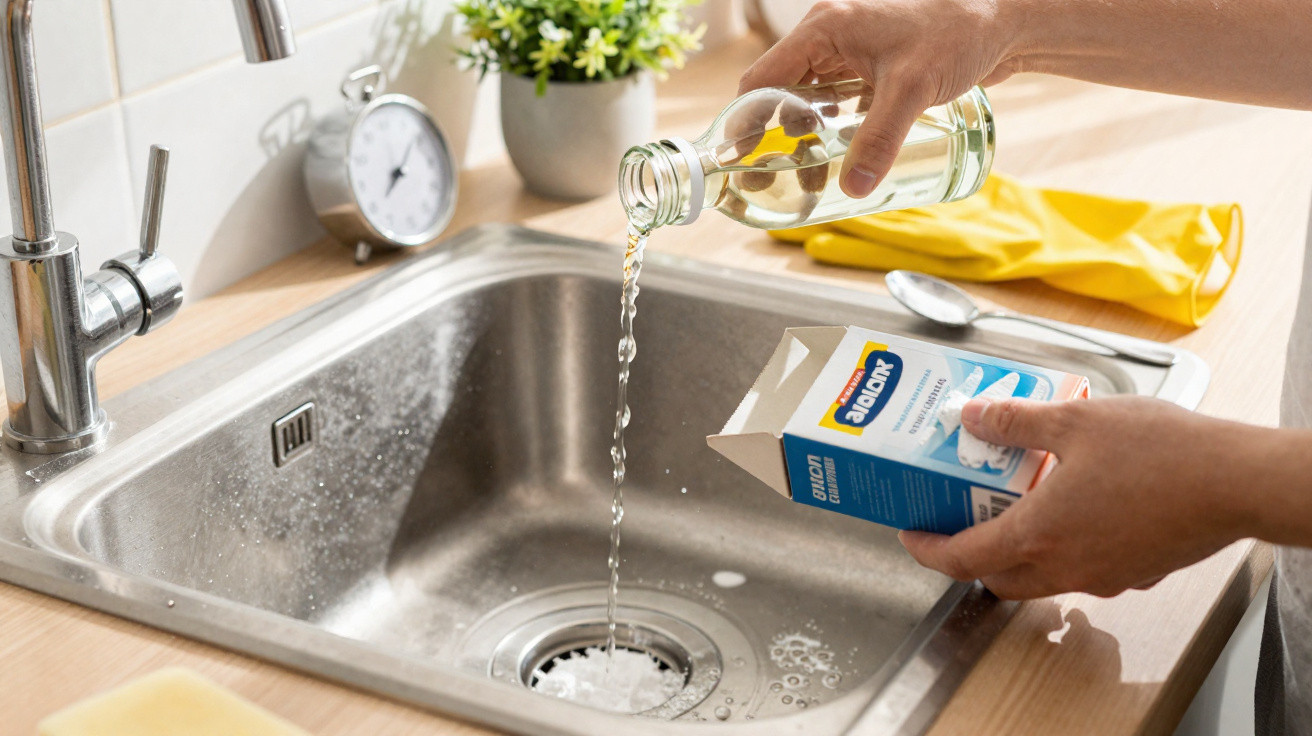
The most common combination for removing heavy crust from a pan uses three main ingredients: bicarbonate of soda, white vinegar and a little mild washing-up liquid. Bicarbonate of soda works as a gentle abrasive, vinegar helps loosen grease, and washing-up liquid helps lift away grime and makes rinsing easier.
For a medium-sized pan, use 2 to 3 tablespoons of bicarbonate of soda, around 100 ml of white vinegar and a few drops of washing-up liquid. The mixture can be made runnier for soaking the inside of the pan, or thicker for treating targeted areas such as the outer base. In either case, make sure the dirty area is thoroughly covered.
How to make and use the bicarbonate of soda and vinegar mixture on pans
Preparing it is straightforward: place the bicarbonate of soda in a small bowl, then gradually pour in the vinegar and allow the fizzing to settle. Next, add the mild washing-up liquid and stir until it becomes either a thin liquid or a creamy paste, depending on how it will be used for cleaning.
In practice, many people divide the process into stages, adapting the mixture for the inside, the outer base and older stains. This helps make the most of its cleaning action in each situation.
- Inside of the pan: spread the mixture over the burnt area, add a little water if needed, and leave it to work for a few minutes.
- Outer base: use a sponge or brush to apply the thicker paste, ensuring the darkened patches are fully covered.
- Older stains: apply the mixture again, or gently warm the solution inside the pan for a few minutes.
How long should the mixture be left on each type of pan?
Resting time affects both the result and the condition of the material. For stainless-steel pans, leave it on for 15 to 30 minutes and always use a soft sponge. For aluminium pans, 10 to 20 minutes is usually sufficient, helping to prevent the vinegar from dulling the metal.
For non-stick pans, make a gentler solution with less bicarbonate of soda and more water. Leave it on for no longer than 10 to 15 minutes, and do not use an abrasive sponge. With cast-iron pans, treatment needs to be brief: leave it for up to 10 minutes, then rinse and dry thoroughly straight away. If desired, finish by applying a thin protective coating of oil.
How can you stop dirt building up on pans again?
As well as using this homemade mixture when things get difficult, everyday care can prevent crusts from building up and keep pans looking shiny for longer. Small changes to routine can make a noticeable difference and save effort at the sink later on.
Washing the pan soon after use, avoiding heating oil over a very high heat for extended periods, and using suitable utensils to avoid scratching the base all help preserve it. Many people also do a quick weekly clean with bicarbonate of soda diluted in warm water, simply to keep things under control and prevent grease from accumulating too heavily.

Comments
No comments yet. Be the first to comment!
Leave a Comment