
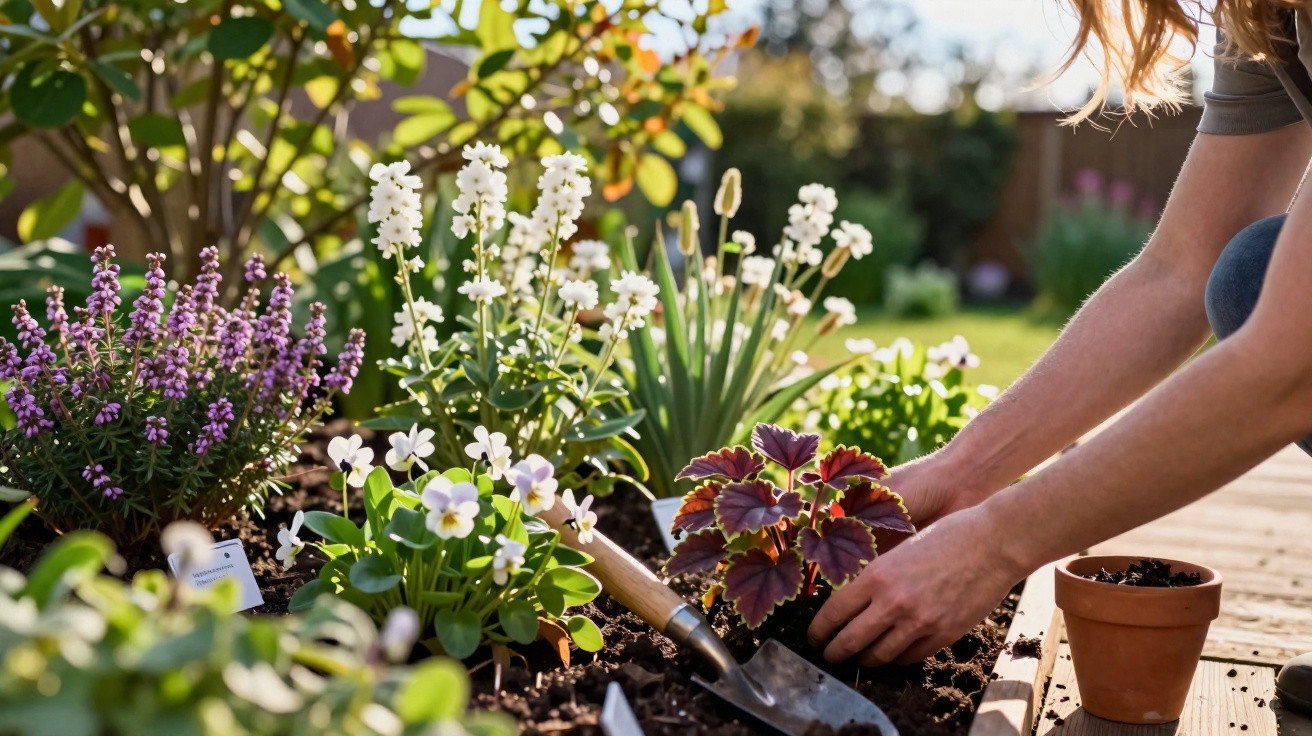
With the right ground cover plants, you can fill these gaps without crowding out your favourite plants.
Many amateur gardeners know the situation: ground cover plants are initially intended simply to cover the soil and create easy-care areas, but a few years later they have taken over half the border. However, some species grow at a restrained pace, protect the ground and still leave perennials enough room. These are precisely the plants that show their strengths in spring.
Why some ground cover plants become a problem
Ground cover plants are often seen as a wonder solution for weeds and drought stress. They shade the soil, retain moisture and stop bare earth from remaining exposed. The drawback is that certain varieties spread so quickly that they push even sturdy perennials to the margins.
Typical “runaway” plants are vigorously spreading, creeping species. They produce long runners or rhizomes that travel through the border below, or just above, the surface. Fresh shoots then emerge among clumps of other plants and can be difficult to remove.
The issue is not ground cover plants themselves, but combining aggressively growing species with delicate perennials in the same border.
Species that form compact clumps are much easier to live with. They expand evenly but far more slowly. Such plants are simple to keep in shape without reaching for the shears every few weeks. These “team players” are exactly what a mixed perennial border needs.
Choosing ground cover plants that do not spread aggressively
Before looking at individual plants, it is useful to consider the key characteristics. Suitable ground cover plants for perennial borders:
- form dense but clearly contained clumps
- have no runners, or only short ones
- do not require drastic control with a spade or root barriers
- suit the border's light levels and soil
- complement perennials visually instead of covering them up
Plants with all these qualities create a calm, well-kept appearance in the border over the long term, without the ongoing stress of constant trimming.
Gentle ground cover plants for shady borders
In shaded areas beneath trees and hedges, or on the north side of the house, many perennials struggle. Carefully selected ground cover plants are especially useful here when they tolerate shade without overwhelming neighbouring plants.
Coral bells (Heuchera): colour in partial shade
Heuchera species are among the most versatile foliage perennials for ornamental gardens. Many varieties work exceptionally well as subtle ground cover between perennials.
- Growth habit: compact clumps, with scarcely any runners
- Rate of growth: moderate and easy to manage
- Position: partial shade to shade; humus-rich, reasonably moist soil
- Key benefit: colourful foliage, ranging from lime green and bronze shades to deep purple
Planted among hostas, astilbes, ferns or shade-tolerant grasses, coral bells provide structure and colour. They leave their neighbours room to breathe while still shading the soil effectively.
Foamflower (Tiarella cordifolia): a carpet for woodland edges
Foamflower originates in North American woods and develops delicate, heart-shaped leaves. In spring, slender white flower spikes rise above them.
It gradually forms a soft, spreading carpet that fills in without aggressively working its way into other clumps. It is ideal beneath open-canopy trees, alongside spring-flowering plants and delicate perennials.
Common blue violet (Viola sororia): a natural carpet in partial shade
The common blue violet is regarded as a native ground cover plant that fits naturally into wildlife-friendly perennial planting. It readily self-seeds, although usually at a moderate pace. Any individual plants that are unwanted can easily be pulled out by hand.
Rather than a sterile formal bed, it creates a lively yet controllable flowering carpet in spring, later overtopped by taller perennials.
Robust ground cover plants for sunny areas
In borders that receive full sun, such as front gardens or strips beside paths, many perennials suffer badly in dry conditions. Low, densely knit ground cover plants help to prevent the soil from baking dry.
Creeping thyme (Thymus praecox): a fragrant gap-filler
Creeping thyme is one of the most dependable ground cover plants for sunny, relatively lean sites. It remains very low, becomes slightly woody and forms dense cushions.
- Position: full sun, free-draining soil, ideally sandy or stony
- Benefits: plenty of nectar for insects and fragrant foliage
- Care: trim lightly after flowering; otherwise it is undemanding
Among low grasses, lavender, catmint or cushion-forming perennials, thyme fills bare spaces without climbing over its neighbours.
Low tickseed (Coreopsis auriculata ‘Nana’)
The ‘Nana’ variety of tickseed grows far more compactly than its taller relatives. It covers the soil with fresh green foliage and produces yellow, star-shaped flowers that bring colour in summer.
In a perennial border, it suits the front edge or the centre of low planting schemes. Its measured growth means that individual clumps can be lifted or moved easily if they become too wide.
Choosing low-growing, compact species for sunny borders reduces watering needs while keeping the perennials visible.
How to plant ground cover plants properly in spring
Spring is the ideal season for adding new ground cover plants to perennial borders or dividing established plants. The soil is moist but no longer icy cold, and plants have an entire growing season to establish strong roots.
- Loosen the soil: dig to at least the depth of a spade and remove the roots of perennial weeds
- Work in compost: lightly incorporate mature garden compost or well-rotted bark compost
- Observe planting distances: plant slightly closer together so that the carpet closes more quickly
- Water thoroughly: give plants a generous watering immediately after planting
- Water while plants establish: keep the soil evenly moist for several weeks
Anyone who already has established clumps of Heuchera, Tiarella or creeping thyme can divide them in spring. Lift the plant, carefully separate it into sections with a spade or by hand, then replant the strongest divisions elsewhere.
Care: keeping ground cover plants in their place
Even restrained ground cover plants need a straightforward care routine to prevent them from becoming too dominant.
Check and trim regularly
Once or twice each year, inspect the border edges and the areas around sensitive perennials closely. Where cushions have grown beyond their intended space, trim them back neatly with sharp shears or a knife.
For more vigorous species, a narrow, sharply cut edge around the border can be helpful. A border spade is enough to sever runners every one to two years.
The best time of day for gardening
Many gardening professionals advise carrying out jobs such as pruning, planting or deep watering during the cooler parts of the day. In the morning, both the soil and air are at more comfortable temperatures. Water evaporates more slowly and plants experience less stress.
Lighter jobs, including tidying, weeding or removing spent stems, can also be done in the evening. In the heat of midday, plants can quickly suffer scorching or drought stress if leaves are wet or roots are damaged.
Saving money: propagating ground cover plants cleverly
Those who do not want to buy new plants from the garden centre every spring can rely on household resources and help from neighbours.
- Make your own compost: compost kitchen waste such as vegetable peelings and coffee grounds with leaves and garden cuttings
- Reuse containers: use old yoghurt pots or tins as propagation containers
- Swap plants: exchange divisions of Heuchera, Tiarella or thyme with friends or neighbours
This makes it possible to plant large areas with ground cover plants without overstretching the budget. At the same time, tried-and-tested, robust plants circulate between gardens, having already proved themselves in similar conditions.
How ground cover plants and perennials complement each other
A carefully planned perennial border with ground cover plants works like a small ecosystem. Low-growing species occupy the soil layer, taller perennials fill the middle level, and individual shrubs or specimen plants provide height and accents.
Thinking broadly in zones before planting - front edge, middle zone and background - prevents competition from the outset. Ground cover plants belong mainly at the front and sides, while larger perennials need their space in the centre or at the back.
Flowering periods can also be coordinated: creeping thyme and violets flower early, tickseed tends to bloom in summer, while coral bells provide leaf colour all year round. The border therefore remains attractive even when the main perennials are taking a break.
Mistakes to avoid when using ground cover plants
Despite their many benefits, the same issues occur time and again. Keep the following points in mind:
- Using one species over very large areas: monocultures can fail completely when pests or fungal disease strike.
- Choosing the wrong position: placing shade plants in blazing sun leads to poor growth and gaps.
- Waterlogging: densely closing carpets on heavy soil without drainage encourage rot.
- No monitoring: even moderate species need occasional trimming.
Gardeners who use several better-suited species instead, and make occasional adjustments through the year, will keep their perennial border healthy over the long term.
Spring is the right time to make these improvements: fill gaps, divide ageing clumps and add ground cover plants where needed. Step by step, this creates a border that looks dense, lively and easy to maintain, without any single plant taking control.






Comments
No comments yet. Be the first to comment!
Leave a Comment