
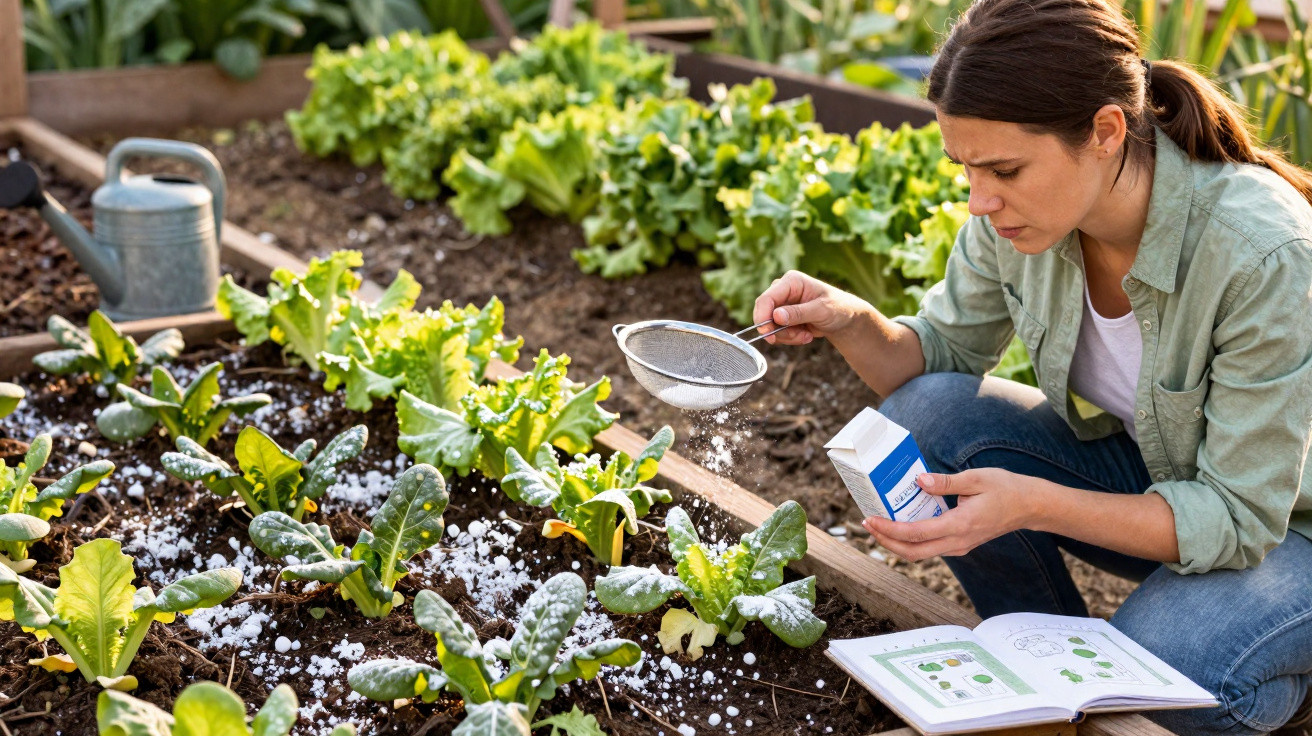
Celebrated online as a harmless miracle cure, exposed in the vegetable patch as a silent plant killer: a supposedly natural kitchen ingredient has destroyed an entire vegetable garden.
Anyone who spends time in gardening forums, on TikTok or on Instagram will constantly come across easy fixes: a pinch of this, a splash of that, and the garden is meant to thrive without chemicals. One amateur gardener was taken in by precisely such a “miracle cure”. The result was a shocking sight: a vegetable bed that suddenly wilted and developed brown patches, despite damp soil and seemingly mild weather.
The “harmless” kitchen powder
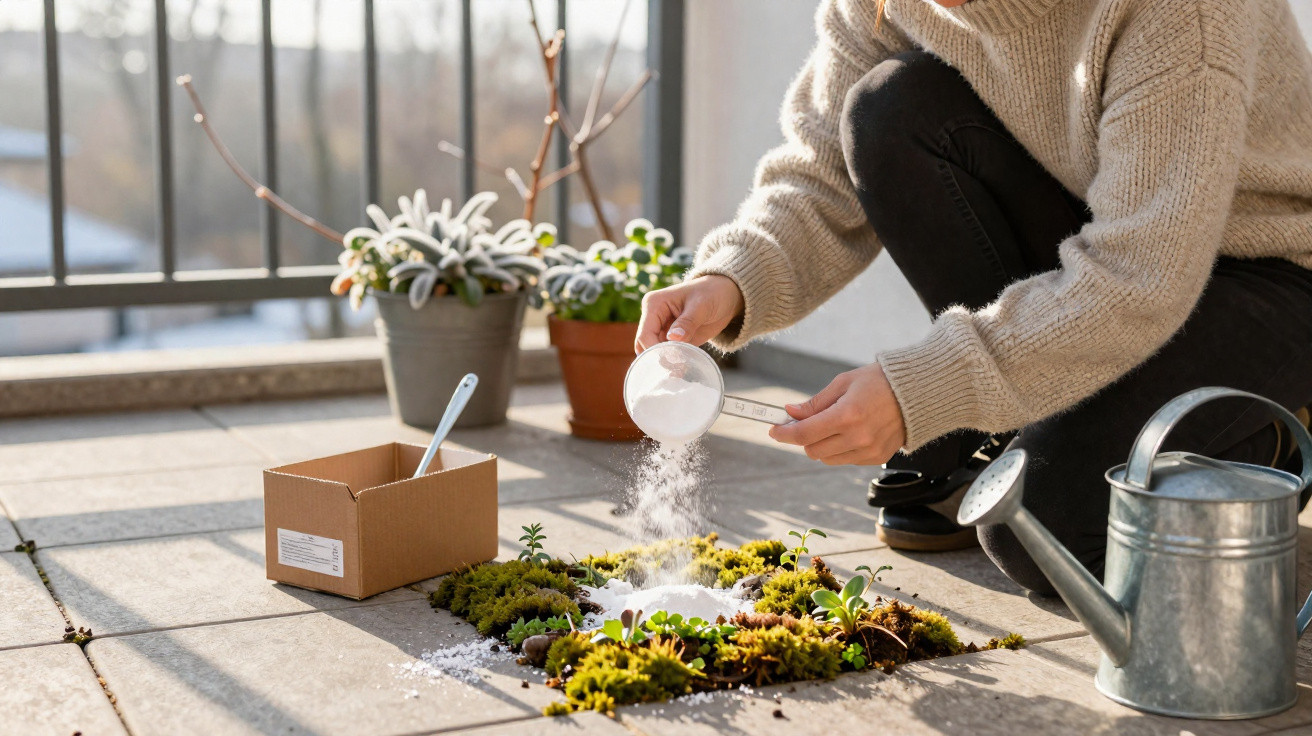
The product in question is something almost everyone keeps in their kitchen cupboard: a white powder said to whiten teeth, neutralise odours and clean grout. For years, household-hint guides have promoted bicarbonate of soda as an all-purpose remedy. Increasingly, amateur gardeners are now adding it to watering cans and spray bottles as well.
Countless social-media videos show users scattering bicarbonate of soda over roses, courgettes or lawns, or dissolving it in water to make a spray. It is presented as the answer to almost every garden problem: fungal diseases, weeds and aphids are all supposedly eliminated by it.
What works wonders in the bathroom can quietly stress plants in a vegetable bed – with the effects only becoming visible days later.
The thinking behind it is appealing: it is “natural”, cheap and even edible, so surely it must be completely safe for plants? That assumption is exactly what throws many beds off balance every year. A substance that people tolerate well can be far too harsh for delicate leaves and fine roots.
How one spray treatment ruined the vegetable bed
The problem in the garden described began with a common fungal disease: powdery mildew, also known as “white disease”. It coats the leaves of courgettes, tomatoes or roses in a whitish, flour-like layer. Forums often recommend a supposedly “bio-friendly” recipe: water, a spoonful of bicarbonate of soda, a little washing-up liquid and oil – and the anti-fungal treatment is ready.
That was exactly the mixture sprayed generously over the leaves, including their upper and lower surfaces, on a sunny, mild day. At first, it appeared to work: the white coating lessened and the plants briefly seemed to recover.
Within only a few days, however, the picture changed completely. Leaf edges turned brown and dry, papery patches developed. Many leaves became brittle, while others curled inwards. Tomato and courgette plants drooped as though they had gone without water for days, even though the soil was moist. Rose buds blackened and dropped off. The supposed plant protection had turned into an unintended weedkiller.
What actually causes the damage
The issue is not the powder alone, but one of its components: sodium. Chemically, bicarbonate of soda is a sodium salt. Sodium can build up when gardeners spray solutions that are too concentrated or repeat treatments too frequently.
Salt stress on leaves
An overly strong solution immediately raises the salt level on the leaf surface. This attacks the leaves’ fine protective layer, known as the cuticle. The result is a clear form of toxicity in plants:
- Leaf edges scorch and turn brown
- Leaves look dry even when moisture is present in the soil
- Plant tissue becomes tough and brittle
- Leaf surfaces curl up or die completely
Plants cannot repair this kind of damage; eventually, they have to shed the affected leaves. The more leaf area they lose, the less photosynthesis can take place, reducing energy production and weakening the entire plant.
A hidden threat in the soil
Anything that does not remain on the leaves during spraying drips into the soil. The sodium does not simply wash away there; instead, it accumulates, particularly in beds with little rainfall and compacted soil.
The consequences below ground can be deceptive:
- Water becomes more tightly bound to salts in the soil
- Roots find it harder to absorb moisture
- The plant effectively “thirsts” despite the soil looking damp
- The pH level rises, making nutrients such as iron and magnesium less available
Typical symptoms include yellowish leaves with veins that remain green, known as chlorosis, stalled growth and plants that look generally tired. At the same time, soil life is disrupted, as many micro-organisms are sensitive to altered salt and pH conditions.
The soil may look fresh and dark while the plant is suffering internally from thirst and nutrient deficiency – caused by too much “miracle cure”.
When the dose becomes dangerous
Garden trials show that, at very low concentrations, bicarbonate of soda can genuinely help slow fungal spores on leaves. It works because the conditions on the leaf surface temporarily become more alkaline, which certain fungi tolerate poorly.
It becomes critical when the solution concentration rises above around one per cent or treatments are repeated regularly. Sodium does not disappear or evaporate; it accumulates. This is where the gradual damage begins, which many amateur gardeners notice only once the vegetable bed is visibly suffering.
If you still want to use it
Anyone wishing to use this substance in the garden should adhere strictly to very restrained dosages. Trial-based practical guidelines are as follows:
| Amount | Recommendation |
|---|---|
| Water | 1 litre, preferably rainwater |
| Powder | 1–2 g, no more than half a level teaspoon tip |
| Soap | Only a few drops, not tablespoonfuls |
Apply it as a fine spray only to affected areas, in the early morning or evening, and never in strong sunshine or heat. Leave at least seven to ten days between applications, and treat again only when it is genuinely necessary.
Gentler alternatives for powdery mildew and more
After their first bad experiences, many gardeners switch to milder options. Methods that have proved useful include:
- Milk or whey, diluted at a ratio of 1:9 with water, sprayed onto leaves against powdery mildew
- Plant tonics such as nettle or horsetail extracts, which support plants’ natural defences
- Wider spacing between plants, allowing leaves to dry more quickly after rain
- Watering at the roots rather than over the foliage, helping to reduce fungal infections
- Mulch layers made from straw, grass clippings or leaves, which retain soil moisture and lessen stress
These approaches often work more slowly and less spectacularly than an online “power mix”, but they place very little strain on plants and soil.
Why “natural” does not automatically mean plant-friendly
This case clearly demonstrates how misleading the word “natural” can be in gardening. Table salt is “natural”, as are vinegar and alcohol, yet all can destroy plant tissue at the wrong dose. The human body is more resilient than a thin leaf cell or a young root tip.
Trend-led household tips are particularly prone to turning a useful principle into a promise of a universal cure. Something that cleans patio grout simply has no place around the roots of lettuce or strawberries. The surface of a ceramic tile responds very differently from living plant tissue.
Practical ways to prevent similar damage
Anyone hoping to protect their vegetable bed from similar mistakes can follow a few basic rules:
- Never apply household cleaning products directly to plants without dilution
- Test every new “tip” on a single plant first
- Spray only rarely and at a very weak concentration
- Watch for symptoms after use: leaf spots, discolouration and halted growth
- If in doubt, choose established, approved plant tonics instead
It is also helpful to consider the soil in your own garden. Salts can be leached out of light, sandy soils more quickly than heavy clay soils. Those growing extensively in raised beds with limited volume face a greater risk of sodium accumulation. Even minor overdoses have a much stronger effect in these conditions.
Understanding the chemical terms involved also makes warning signs easier to spot. “Phytotoxic” simply means toxic to plants. Specialists use the term “physiological drought” when a plant cannot absorb water despite moisture being present in the soil – for example, because excessive salts block the movement of water. Both effects can be triggered by careless experiments with salt solutions.
Gardening is always a learning process. Mistakes happen, especially when people are seeking supposedly gentle alternatives to conventional plant-protection products. Anyone who flushes their bed after an unsuccessful bicarbonate of soda treatment, gives it plenty of water and chooses carefully tested, low-dose methods in future can limit the damage – and turn their own “miracle cure” mishap into a healthier, more resilient garden in the long term.
Comments
No comments yet. Be the first to comment!
Leave a Comment